Operations | Monitoring | ITSM | DevOps | Cloud

The latest News and Information on Cloud monitoring, security and related technologies.

How to Monitor Microsoft SharePoint Online Performance

In this video, we’ll cover the basics of getting started with Exoprise CloudReady and how to set up your first sensor to monitor Microsoft 365 SharePoint from your own locations or behind the firewall. You will learn how to quickly install the management client, add a private site, deploy a SharePoint sensor and visualize the data in the CloudReady platform all in under 5 minutes. CloudReady supports deploying private sensors behind your firewall or public sensors in the cloud for synthetic transaction monitoring. Service watch, on the other hand, can be deployed for real user monitoring of remote user issues.

We're Bringing Cloud DevOps to Government Clouds on AWS and Azure

Helping software producers achieve compliance with regulatory requirements has been a huge part of our focus at JFrog. That’s why many in the most regulated industries such as banking, finance, manufacturing, and retail are our customers for DevOps. We’re excited to announce that JFrog DevOps Platform solutions – JFrog Artifactory and JFrog Xray – are now available with native deployment templates for customers using AWS GovCloud (US) and Azure Government clouds.

Why Finance Teams Love CloudZero (Even if It's Built for Engineering)

CloudZero is a platform that helps you understand cost — but that doesn't mean it's purely a finance tool. In fact, unlike most other cloud cost management and optimization solutions, it’s built for engineering. However, CloudZero still makes a lot of finance teams very happy. First of all, the work that engineering teams do while using CloudZero saves money, which every finance team appreciates.

Key metrics for monitoring AWS Fargate

AWS Fargate provides a way to use AWS container orchestration services—Amazon Elastic Container Service (ECS) and Amazon Elastic Kubernetes Service (EKS)—without needing to provision and maintain the infrastructure that runs your containers. Fargate is similar to serverless container platforms from Google (Cloud Run) and Microsoft (AKS virtual nodes).

How to collect metrics and logs from AWS Fargate workloads

In Part 1 of this series, we showed you the key metrics you can monitor to understand the health of your Amazon ECS and Amazon EKS clusters running on AWS Fargate. In this post, we’ll show you how you can: You can use Amazon CloudWatch and related AWS services to gain visibility into your ECS clusters and the Fargate infrastructure that runs them.

AWS Fargate monitoring with Datadog

In Part 1 of this series, we looked at the important metrics to monitor when you’re running ECS or EKS on AWS Fargate. In Part 2 we showed you how to use Amazon CloudWatch and other tools to collect those metrics plus logs from your application containers. Fargate’s serverless container platform helps users deploy and manage ECS and EKS applications, but the dynamic nature of containers makes them challenging to monitor.
Why to Use Git Instead of "TFS" (TFVC)

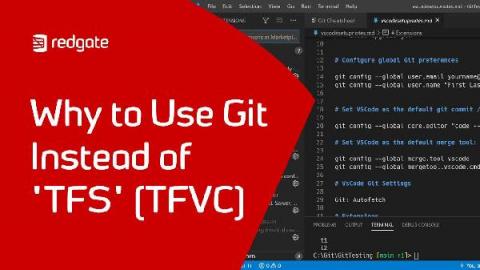
One question we frequently hear from customers using the Microsoft stack is, “should I use Git or TFS?” The question requires a little decoding due to the way that Microsoft has shifted their brands over time. Here’s some background. Many people still refer to this as “TFS,” regardless of the version they are using. TFVC used to be the default type of repo for TFS projects.

Azure Management Talk: Application Observability in a Distributed world

In this session, Chris Reddington will provide an overview of Application Insights and how it slots into the wider Azure Monitoring ecosystem. We will explore Alerts, Metrics, Queries, Dashboards, Workbooks and more, and how Application Insights can bring clarity to a distributed cloud deployment.