Operations | Monitoring | ITSM | DevOps | Cloud

The latest News and Information on DevOps, CI/CD, Automation and related technologies.

An intro to Infrastructure as Code

Infrastructure as Code (IaC) is the practice of recording the desired state of your infrastructure using a declarative language. In this article, I’m going to assume that your team is starting from scratch. Maybe some of your build process has been scripted, and maybe there is some manual testing and quality assurance work happening. Many readers will find that they are midway through the IaC adoption journey I’ll describe, or that they have missed some steps.

Mapping FluxCD Applications

Flux is a CNCF based open source stack of tools. Flux focuses on making it possible to keep Kubernetes clusters and cloud-native applications in sync with external resources and definitions hosted in environments such as GitHub. Implementing tools like FluxCD should enable you to achieve results such as: The results above can bring obvious benefits, and many teams are adopting FluxCD as their tool of choice for GitOps.

Data centre networking: what is SDN?

The recent contexts have shown that enterprises needed to take a different approach regarding their digital transformation and its prioritisation. They’ve experienced the need to run new configurations and operations remotely on their infrastructure. This quickly showed the benefits of automation solutions to run those changes from few central locations, which highly facilitated the task of systems and network admins.

Provisioning bare metal Kubernetes clusters with Spectro Cloud and MAAS

Bare metal Kubernetes (K8s) is now easier than ever. Spectro Cloud has recently posted an article about integrating Kubernetes with MAAS (Metal-as-a-Service. In the article, they describe how they have created a provider for the Kubernetes Cluster API for Canonical MAAS (Metal-as-a-Service). This blog describes briefly the benefits of bare metal K8s, the challenges it presents, and how the work by Saad Malik and the team from Spectro Cloud solves those challenges.

Getting Started With the InfluxDB Template for NGINX Ingress Controller

Today, many of the internet’s busiest websites and applications rely on NGINX to run smoothly. And many of those websites and apps are run as cloud-native services in Kubernetes. In particular, the NGINX Ingress Controller is a best-in-class traffic management solution for cloud‑native apps in Kubernetes and containerized environments that uses NGINX as a reverse proxy, load balancer, API gateway, cache, or web application firewall.

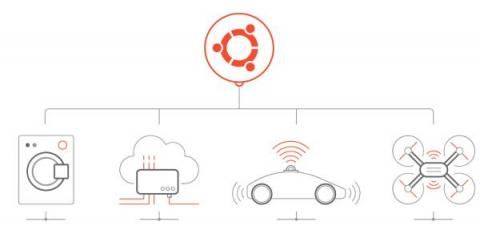
JFrog and Upswift: Bringing IoT Software Updates to DevOps Upswift Acquistion

JFrog has acquired Upswift to bring the world of connected devices into the DevOps pipeline! Managing fleets of devices and edge applications remotely - including over-the-air (OTA) updates, security, monitoring, controlling and more - has quickly become unwieldy for most companies, with growth of connected devices expected to reach 24 billion in 2026. But, most of today’s DevOps solutions are not optimized or built to deliver software updates to distributed edge and IoT environments.

Bootstrapping a multi DC cloud native observability stack by Bram Vogelaar

An introduction to Observability and how to setup a highly available monitoring platform, across multiple data centers. During this talk we investigate how to config a monitoring setup across 2 DCs using Prometheus, Loki, Tempo, Alertmanager and Grafana. Bram Vogelaar spent the first part of his career as a Molecular Biologist, he then moved on to supporting his peers by building tools and platforms for them with a lot of Open Source technologies. He now works as a DevOps Cloud Engineer at The Factory.

Tales of A11y In Grafana OS: Introducing Pa11y CI into our pipeline by Alexa Vargas

We want to make Grafana accessible to everyone! In this talk, Alexa will share how Grafana recently introduced Pa11y CI into the Grafana Continuous Integration pipeline. The library supports our developers and contributors to highlight a11y issues. And more importantly, it acts as a gatekeeper, stopping new A11y issues from making it into the project. You will additionally hear about the alternatives that were considered and their challenges. This talk will have everything!

Self Healing Kubernetes at the edge

As developers and businesses are shifting their attention to the edge, everyone wants to build their own edge clusters and manage them. However, building a highly available edge cluster is not easy. Kubernetes simplifies container deployments by abstracting the resource management details from the users, allowing them to deploy using standard CLI or templates.