The latest News and Information on DevOps, CI/CD, Automation and related technologies.
When businesses have a high number of computers, getting all of them turned on manually can be a herculean task for any network admin. This can lead to organizations keeping their computers on even when not in use. Of course, this approach is not ideal, as electricity bills would skyrocket in result. That said, there are legitimate reasons for a network admin to leave a machine running after business hours (e.g., system maintenance or configuration management).
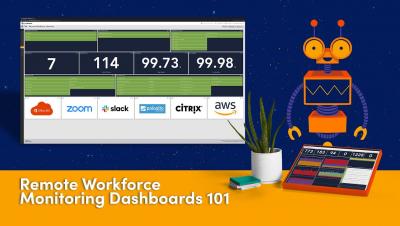
For many of us, the sudden en-masse work-from home revolution has been an unexpected challenge. Our normal work patterns have been upended, and we’ve traded our perfectly tailored ergonomic office setups for kitchen tables and sofas. Our routines and patterns have been thrown out the window. We may start feeling distant, isolated, and disconnected.
If you’re the resident expert in your company on a particular technology, you probably get asked a lot of questions about it: how to set it up, how to maintain it, how to monitor it. While it’s great to be recognized as the expert, all these requests for help can steal time away from your day job. Thankfully, we’ve got something that will help: InfluxDB Templates.
Today we’re proud to share that Stackery has achieved the AWS Lambda Ready designation for continuous integration and delivery! This differentiates Stackery’s secure serverless delivery platform as fully integrated with AWS Lambda. It also shows our existing and prospective customers that Stackery is a uniquely valuable serverless platform and member of the AWS Partner Network (APN).
“I want to look them in the eye.” It’s a common saying about the importance of body language. In the past, that “look” might take a day of travel and cost most of a day of productivity. Today, however, modern enterprises are turning to real-time unified communication solutions to get meeting participants engaged—and cloud technology is the key.
“With sustainability our primary focus, our technology strategy has to mirror our overall approach. With Rancher we’re driving real transformation to prime us for long-term growth.” – Zach Dunn, Senior Director of Platform Operations and CSO, Optoro. Have you ever considered what happens to items you return to etailers? In retail, especially ecommerce, nearly 25 percent of all goods are returned or don’t sell.
Editor's note: This blog is part two of our series on launching an app to AWS. For the first installment, "How to deploy an app to AWS: Getting started," click here. So, your application is ready for production. You’ve taken an inventory of your applications, dependencies, and configuration. Now, you’re ready to create a new AWS account and start launching resources.
If you’re using Linux, I’m sure you bumped into journald: it’s what most distros use by default for system logging. Most applications running as a service will also log to the journal. So how do you make use of these logs to: In this post, we’ll answer all the above and more. We will dive into the following topics: There are lots of other options to centralize journal entries, and lots of tools to help.