Operations | Monitoring | ITSM | DevOps | Cloud

The latest News and Information on DevOps, CI/CD, Automation and related technologies.

Who Really Screwed Up the PHP2Shell Security Crisis?

The PHP2Shell vulnerability triggered a massive cybersecurity crisis. But the real story isn't just about the PHP security flaw. It's about who broke the rules, who was responsible, and whether one controversial decision made everything worse. In October 2026, researchers uncovered critical PHP vulnerabilities (CVE-2026-109618 and CVE-2026-109619) that threatened websites and applications across the internet. As security teams scrambled to prepare patches, the coordinated disclosure process began falling apart.
The Secure PaaS Alternative: Keep the PaaS Experience, Run It on Your Own Cloud

Railway, Northflank and seven other developer platforms disclosed breaches in October 2026. Here is why a shared PaaS turns one breach into everyone's breach, how Qovery gives you git-push deploys while your apps and data run in your own AWS, GCP, Azure or Scaleway account, and what Qovery still holds. Romaric founded Qovery to make Kubernetes accessible to every engineering team. He writes about platform strategy, developer experience, and the future of cloud infrastructure.

Shipped: Dimension descriptions, right where you pick them

Picking a dimension means choosing from a list of names. But names only tell users so much. “Product,” “Team,” and “Cost Center” mean different things in different orgs. If you’re building a report you have to guess which one fits the question you’re answering.

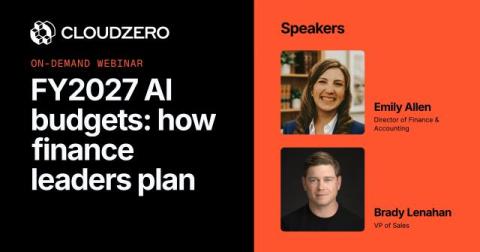
Webinar recap: FY2027 AI budgets and how finance leaders plan

CloudZero's Emily Allen and Brady Lenahan talked through how finance capitalizes AI spend and sets limits on it after a year of companywide AI adoption. Picture your AI line item last fall. A few seats, one vendor, tucked inside the software budget. Now picture it today. That’s the year Emily Allen, director of finance and accounting at CloudZero, walked through in our 30-minute webinar FY2027 AI budgets: how finance leaders plan on October 29, 2026.

How to run coding agents in parallel without piling up PRs

Running several coding agents at once is pretty straightforward. Give each a task, let them work independently, and you can make progress on multiple things at the same time. But the more agents you have working, the more changes you need to coordinate. Agents can edit overlapping code, make conflicting assumptions, or finish work that depends on changes another agent hasn’t completed.

Work in progress is the new software delivery bottleneck

Starting new software work has never been easier. Developers can assign tasks to multiple coding agents, let them work independently, and turn their attention elsewhere while those agents write, test, and revise code. As models improve, teams have more opportunities to pursue work that previously would have waited. Getting all that work validated and merged is another matter. The 2026 State of Software Delivery Q3 Pulse report shows teams working across more branches and projects.

Running Ansible Playbooks in CI/CD: GitHub Actions and GitLab CI Guide [2026]

Most teams reach for Ansible in CI/CD pipelines the same way: a shell step that runs ansible-playbook, SSH keys stored as secrets, and a growing list of manual steps nobody documented. It works until it doesn't : then the failure happens at the worst possible moment and the pipeline becomes a debugging session.

What does a commercial analyst actually do?

I don't write SQL. Not by hand anyway. That might sound like a confession, but it's true of most analysts (and engineers) now. In the 9 months since joining incident.io I have built headcount models for hiring decisions, a Slack bot for assigning new customers, guidance for our AI data analyst, and a couple of internal web apps. If you asked me which of those counted as "analysing data", I'd struggle to say. A lot of that comes down to the "commercial" part of the job title.

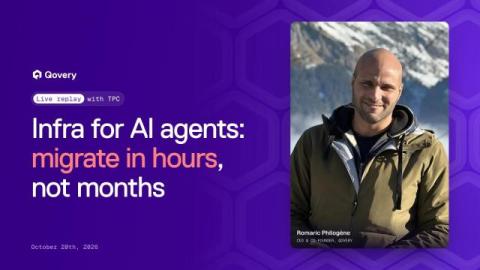
Infrastructure for AI Agents: Migrate in Hours, Not Months (Live Replay)

Replay and key takes from our October 20 live with TPC: why Day Two is 80% of infrastructure work, why shared staging breaks when agents write the code, how agents cut migrations from months to hours, and how to keep agents under control with policy tokens and audit logs. Romaric founded Qovery to make Kubernetes accessible to every engineering team. He writes about platform strategy, developer experience, and the future of cloud infrastructure.