Operations | Monitoring | ITSM | DevOps | Cloud

The latest News and Information on DevOps, CI/CD, Automation and related technologies.

IA for AI: Rethinking How We Store, Surface, And Share Data In A Conversational World

Information architecture used to be about structure. We organized menus and pages into trees, built hierarchies, and created pathways for people to follow. For years, that worked. Navigation was the interface. But that world is changing. People aren’t clicking their way through information anymore. They’re asking for it. They’re refining questions, expecting context, and assuming that systems will not only understand what they mean, but act on it.
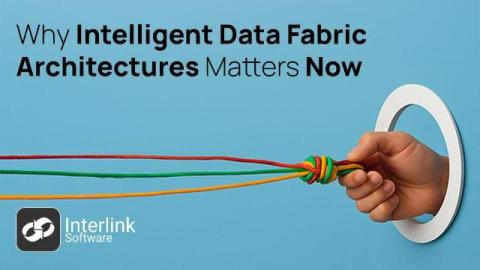
From data management to an intelligent data fabric architecture

Large enterprises today manage more machine data than ever before. From legacy applications to modern, ERP and supply chain systems to cloud infrastructure, cybersecurity, and customer-facing applications, much of this valuable data remains trapped in silos, limiting its potential to drive faster decisions, strengthen resilience, and meet the demand for optimum service availability.

The engineering leader's guide to AI tools for developers in 2026

The holiday shopping season is a familiar ritual for many. We spend hours researching the best deals, comparing features, and reading reviews to make sure we’re investing in the right things. As we all come to grips with the fact that 2026 is right around the corner, engineering leaders are doing the same thing, but largely in response to the explosion of AI developer tools.

Microsoft Sentinel Cost Optimization with Staged Routes and Commit Processors

As security data volumes grow, so do the costs of processing and storing them. Microsoft Sentinel and other SIEM platforms charge based on data ingestion, which makes every decision about normalization rules critical and every duplicate log a direct expense. Enterprise-scale security data pipelines face a persistent problem: data duplication across normalization tiers. As logs move through multiple transformation stages, it’s often impossible to know in advance which version will succeed.

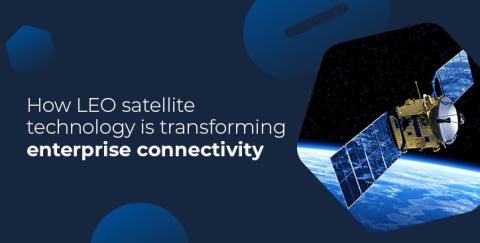
How LEO satellite technology is transforming enterprise connectivity

How LEO satellite technology is transforming enterprise connectivity It’s not new to say that reliable, high-speed connectivity is critical for businesses. Yet even as global networks expand, many enterprises still face connectivity challenges, whether operating in remote industrial zones, across oceans or in developing regions with limited terrestrial infrastructure.

What Is Multivariate Testing? A Guide to Experimenting With Multiple Elements

A/B testing is great — but what if you want to optimize more than one thing at a time? That’s where multivariate testing (MVT) comes in. In this video, we break down how MVT works, why it gives you deeper insights than A/B testing, and how you can use it to test multiple page or app elements at once. You’ll learn how to run multivariate tests, when to use them over A/B tests, and how Harness makes this seamless inside your CI/CD pipeline.

What Is a T-Test? A/B Testing with Statistical Confidence

When running A/B tests, how do you know if the results are actually meaningful — or just random chance? That’s where the t-test comes in. In this video, we explain how t-tests help you evaluate whether changes in conversion rates, engagement, or performance metrics are statistically significant. You’ll learn how they work, when to use them, and why they’re essential for making confident product, marketing, and engineering decisions.

Software Release Life Cycle Explained: From Planning to Production

Software doesn’t go live overnight. It moves through a structured, repeatable process known as the software release life cycle — from initial planning to deployment and ongoing maintenance. In this video, we break down each stage of the release cycle: planning, development, testing, staging, deployment, and monitoring. You’ll also see how modern tools like Harness help teams automate CI/CD, feature flags, testing, and progressive delivery to ship better software faster and with less risk.

Mocking PostgreSQL the Easy Way: Simplifying Testing with Speedscale Proxymock

Every developer who’s worked with PostgreSQL knows the pain: testing against a real database slows everything down. You need the database running locally, loaded with the right data, and configured to match production as closely as possible. Every time you run a new test or build, you’re forced to repeat that setup migrate schemas, seed test data, and clean everything up again. It’s time-consuming, brittle, and hard to scale across a team.