The latest News and Information on Log Management, Log Analytics and related technologies.
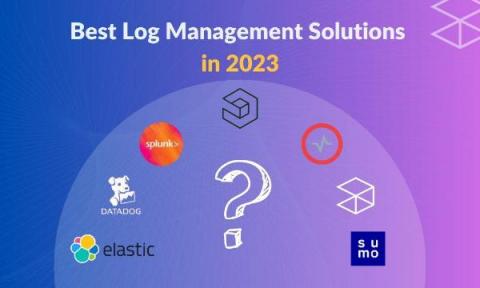
Log Management tools are crucial for the security and performance of your IT infrastructure. With the right log management system, you can quickly detect and respond to any anomaly or performance issue. Presently, there are numerous log management platforms. Each with its own unique set of features and benefits. While most of these platforms offer industry-standard capabilities, what sets them apart from each other are the stand-out features, pricing, and overall user experience.
The State of DevOps Report finds a clear link between documentation quality and an organization’s ability to meet its performance goals.
On June 28th I will be hosting a webinar, ‘The Fundamentals of Searching Observability Data’. So why should you attend? Because things have, and will continue to change in the way we manage the IT data collected across the enterprise. A recent study shows that enterprises create over 64 zettabytes (ZB) of data, and that number is growing at a 27 percent compound annual growth rate (CAGR). The scary part?
The basic goal of log management is to make log data easy to locate and understand so that users can identify how their services are performing and troubleshoot more quickly. Logging as a Service, or LaaS, takes log management a step further by providing a solution that seamlessly scales and manages your log data via cloud-native architecture.
Distributed microservices and cloud computing have been game changers for developers and enterprises. These services have helped enterprises develop complex systems easily and deploy apps faster. That being said, these new system architectures have also introduced some modern challenges. For example, monitoring data logs generated across various distributed systems can be problematic.
IT, DevOps, and security teams are figuring out the best ways to manage their complex, ever-growing, ever-changing environments. And one contributing factor to all the complexity is the rise of using multiple cloud services. One cloud service to manage is difficult enough, but adding more to the mix — each with its own interface and set of tools — makes everyone’s job significantly more difficult.
Any web-based business must have effective log monitoring in place to guarantee the efficient operation of its applications and systems. Tools for log monitoring are essential for error detection, performance analysis, and problem-solving. The top five log monitoring tools will be examined in this post, along with their features, prices, advantages, and disadvantages.