The latest News and Information on Monitoring for Websites, Applications, APIs, Infrastructure, and other technologies.
According to a recent survey by Gartner, business leaders anticipate a return to growth for their enterprises and industries in 2022, and a big part of their investment plans involve digital transformation. In fact, 20% of CEOs cited digital transformation as a priority for strategic investment. That is a significant shift from 2012 when Gartner found that only 2% of CEOs surveyed had made digital transformation a priority.
On October 4, Facebook and its properties, Instagram and WhatsApp, were down for more than five hours due to configuration changes on routers in Facebook’s data centers. A five-hour outage is an eternity in our always-on digital economy, costing the company an estimated $65 million and 4.8% in stock valuation. The high-profile Facebook outage is emblematic of just how digitally intermediated our economy is becoming, and the incident renews C-level focus on preventing similar service failures.
AppSignal users will immediately notice that we’ve updated our product navigation. The new navigation is simpler, cleaner, and improves usability for (power) users. Let’s dive into these changes, along with some background on our philosophy of designing for developers.
Kubernetes 1.23 is about to be released, and it comes packed with novelties! Where do we begin? This release brings 45 enhancements, on par with the 56 in Kubernetes 1.22 and the 50 in Kubernetes 1.21. Of those 45 enhancements, 11 are graduating to Stable, a whopping 15 are existing features that keep improving, and 19 are completely new. The new features included in this version are generally small, but really welcomed. Like the kubectl events command, support for OpenAPI v3, or gRPC probes.
Written by Microsoft MVP Nick Cavalancia. Earlier this month, Microsoft announced the 2022 rollout of Mesh for Microsoft Teams as the next step in online and virtual collaboration. This seemingly bold step forward into a new type of interaction between individuals is more a natural evolution, taking years of augmented reality research and applying it in a way that provides value to organizations wanting to better collaborate.
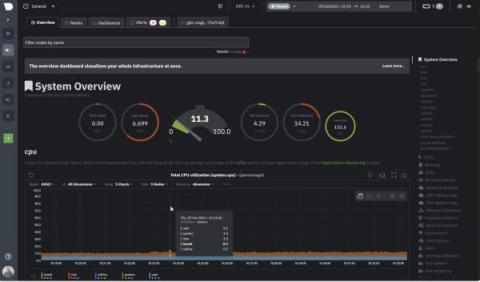
Netdata excels in collecting, storing, and organizing metrics in out-of-the-box dashboards for powerful troubleshooting. We are now doubling down on this by transforming data into even more effective visualizations, helping you make the most sense out of all your metrics for increased observability. The new Netdata Charts provide a ton of useful information and we invite you to further explore our new charts from a design and development perspective.