You may wonder, how long does a background check take? Our article answers how long you can expect a background check to take, with common reasons for delay.
There is nothing worse than developing the perfect technological operations and processes only to find that cybercrime interferes with them and diminishes the success and efficiency of your business. Therefore, to stop cybercrime being a problem for your business and the way that it is run, here is what you need to know and do in 2024.
Top GCP cost management tools in 2024 The cloud offers unparalleled scalability and agility, but keeping your Google Cloud Platform (GCP) bill under control is a challenge. Here’s where having a GCP cost management tool comes in—your secret weapon for optimizing your cloud spend and maximizing value.
At Raygun, we understand the importance of an automated development workflow for quick bug fixes. That’s why we’re excited to announce the enhanced JIRA and Raygun integration.
Prevent buyer's remorse. Use these ‘green flags’ from our Senior Director of Customer Success to find + pick a vendor that’ll keep you moving forward whenever the unexpected threatens to hold you back.
Service operations (ServiceOps) is a technology-enabled approach that unifies IT operations and IT service (ITSM) teams and facilitates frictionless collaboration for more effective incident management. ServiceOps combines people, processes, and technology to improve visibility, workflows, and collaboration between otherwise siloed departments. Organizations of all sizes and industries worldwide have adopted ServiceOps.
In a previous post, we discussed initiating your AIOps journey. Now, we’re exploring best practices for progressing through each phase of the maturity journey. In these posts, we’ll focus on how to get started, proven techniques, key participants, and how to measure success.
The Industrial Internet of Things (IIoT) has revolutionized the way industries operate, enabling businesses to collect and analyze data from their operations in real-time. However, managing and analyzing data from diverse sources can be a challenge. While sensors and systems may use the same transport protocols, the shape and type of data generated can vary from one device to another. A lack of uniform, clean data creates challenges and obstacles when it comes to getting timely insights.
IT teams often find themselves in a constant state of emergency: dealing with issues as they arise. So few issues are reported when they happen that IT teams are left with no choice but to be reactive. This reactive approach is not only a drain on resources, it also hampers system improvements and reduces user satisfaction.
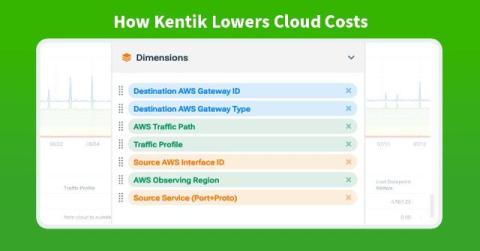
Migrating to public clouds initially promised cost savings, but effective management now requires a strategic approach to monitoring traffic. Kentik provides comprehensive visibility across multi-cloud environments, enabling detailed traffic analysis and custom billing reports to optimize cloud spending and make informed decisions.