Operations | Monitoring | ITSM | DevOps | Cloud

Future of Debt: Will Technology Lead to Financial Liberation?

Is the proliferation of apps and automated lending services too good to be true? While digital banking and AI advisors offer convenience, consumers must consider the costs of having 24/7 access to credit. The alarming $15 trillion debt burden in America raises concerns about innovations that can empower but also pose risks. Even though decentralized ledgers and predictive analytics promise freedom, worries about volatility and bias persist.

Sponsored Post

Enhancing Aspire with AI: integrating Ollama for local error resolution

In this article, we'll explore how we developed an Aspire component that spins up an Ollama container and downloads a Large Language Model, ready for use. If you're new to any of these technologies, you can continue reading, otherwise feel free to skip to the technical walkthrough. As a quick bit of background, we recently released an Aspire component that brings a free, lightweight Raygun app into your local development environment to help debug exceptions. We then subsequently enhanced this with AI Error Resolution capabilities which runs entirely on your local machine.

What Is Cloud Orchestration? The 15 Best Tools In 2024

Automation is something you hear a lot about in cloud computing. When done well, it helps save time and eliminates human error. Automation can also help you innovate faster because it frees up your IT talent to focus on innovation – rather than repetitive tasks. But did you know cloud orchestration could be the real reason for those benefits — and not really cloud automation?

What is Network Mapping? Process, Purpose, & Best Practices

Network mapping is the process of exploring, identifying, cataloging, and then visually representing all of the devices (both real and virtual, local and remote) connected to your network. This vital documentation task should be performed regularly to ensure that you have a clear picture of your network and security landscape, so that you can quickly identify and fix issues.

Exploring Enterprise Mobility Management (EMM)

When mobile devices first made their way into the workplace decades ago, mobile device management (MDM) provided device-level control and security. As mobile technology advanced, enterprise mobility management (EMM) grew out of MDM to include mobile application management (MAM), mobile content management (MCM) and identity and access management (IAM). Today, EMM gives you a comprehensive approach to managing the various usage and security aspects of mobile devices in the workplace.

How To Protect Against Malicious Code

Malicious code, also known as malware, is any piece of software that deliberately damages your systems or causes them to malfunction (as opposed to a software bug that may unintentionally do these things). The reasons for this may be simple mischievousness, curiosity, or a proof of skill for bragging rights.

Add a New Discovery Source For Virtual Machines With InvGate Insight's VMWare Integration

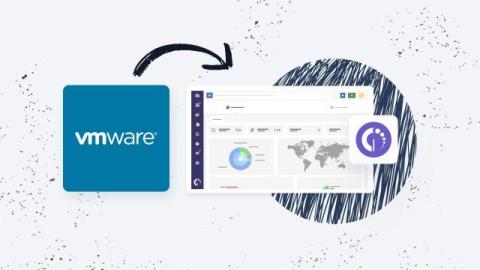
Discovery sources periodically run network analyses to identify devices in your IT environment, ensuring your asset inventory is updated and reliable. It is a fundamental function of any robust IT Asset Management (ITAM) tool. For this reason, we are eager to announce that InvGate Insight now integrates with VMWare! This means that now you can automatically discover and integrate ESXis and vCenters and incorporate them into your inventory without the need to download an individual agent on each one.

How to optimize for Google's new Core Web Vital INP

Effective March 12, 2024, Google replaced the First Input Delay (FID) metric with Interaction to Next Paint (INP) as a part of its Core Web Vitals. This change marks a significant shift in how web interactivity is measured, reflecting a more comprehensive view of user experience. This blog explores INP, strategies for optimization, and asks if FID is still a valuable metric.

Lessons learned after migrating Azure Functions to Isolated Functions on .NET 8

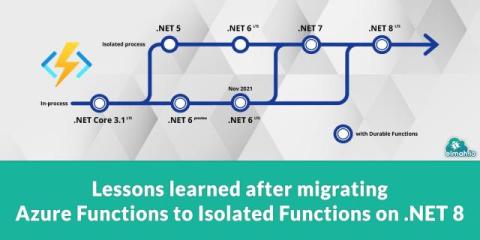
The In-process model of running Azure Functions is being retired in favor of the Isolated model in two years. A lot of components on elmah.io are running on Azure Functions. To ensure we are running on the most modern and supported platform (also in two years), we have spent quite some time migrating from In-process to Isolated functions. In this post, I'll share both a checklist to help you do the same as well as some of the lessons learned we had during the migration.