Operations | Monitoring | ITSM | DevOps | Cloud

4 takeaways from Knowledge 2023

Knowledge 2023 united thousands of ServiceNow customers and colleagues from all over the world at the first single global user conference in three years. ServiceNow CEO Bill McDermott opened the show, and announcements about innovations enabled by the Now Platform didn’t stop. Three days of keynote sessions, fireside chats, roundtables, and demos offered something for everyone in attendance. Here are four key takeaways from this year’s flagship event.
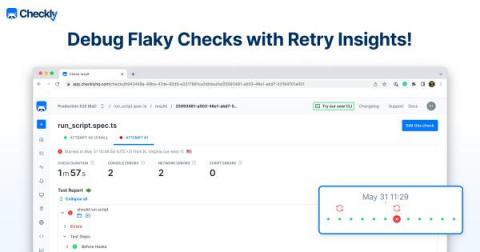

Using Retry Insights to Identify Flaky Checks

As you know, having reliable checks is a cornerstone of synthetic monitoring. We don’t want false alarms, or worse, checks succeeding when things aren’t working. But sometimes, problems can be hard to identify because they only happen intermittently, or in certain situations. Similarly, monitoring results can be skewed by infrastructure issues, or network errors on the monitoring provider end, causing false alarms when there is actually no problem with the product.

Ubuntu Core as an immutable Linux Desktop base

Canonical began the development of Ubuntu Core in 2014, to create a fully-containerised platform for IoT. In Ubuntu Core, we use the same kernel container technology that Docker and LXC are built on, to put every component of the system into a secure sandbox, with well-defined upgrade and rollback. We did this to enable autonomous connected Internet of Things devices to receive updates which they could apply without human intervention, to address security and business needs at the edge.

New Check Type this May: Page Speed Monitoring!

The Uptime.com Page Speed Check has arrived! 🚀 We’ve rebuilt our old Website Speed free test using the most up-to-date analytics, metrics, and auditing tools available to make sure that your websites are performing as expected, every single hour of every day. Keep reading to see exactly how our new Page Speed Check can take your website monitoring and observability to the next level.

Kubernetes Architecture Part 1: Reasons to Choose Kubernetes

This Kubernetes Architecture series covers the main components used in Kubernetes and provides an introduction to Kubernetes architecture. After reading these blogs, you’ll have a much deeper understanding of the main reasons for choosing Kubernetes as well as the main components that are involved when you start running applications on Kubernetes. This blog series covers the following topics.

Unlocking the Co-Managed IT Services Opportunity

Earlier this month at N-able’s Empower partner event in Prague, I sat down with Head Nerd Stefanie Hammond, to discuss co-managed IT services and N-able’s recently released Co-managed Digital Playbook for MSPs. Whether you’re new to co-managed or looking build on existing offerings, the playbook provides guidance to MSPs on how to build, price, market, and sell co-managed IT services.

Use incident cycle time to optimize your incident response process

Although the causes and solutions for incidents vary widely, most incidents follow a similar timeline from declaration to resolution. We call the period of time it takes to move from one phase or milestone of an incident to the next cycle time.

From Spotify to Open Source: The Backstory of Backstage

Technology juggernauts–despite their larger staffs and budgets–still face the “cognitive load” for DevOps that many organizations deal with day-to-day. That’s what led Spotify to build Backstage, which supports DevOps and platform engineering practices for the creation of developer portals.

Elevate Customer-Facing Contact Centers with Nexthink

Contact centers (or call centers) are crucial touchpoints for customer interactions across various channels, including phone, email, SMS, live chat, and more. As businesses strive to deliver exceptional customer experiences (particularly in high-volume consumer-facing industries such as financial services, telecom, travel, insurance, healthcare, online retail, etc.), it’s imperative to optimize contact center performance. How imperative?

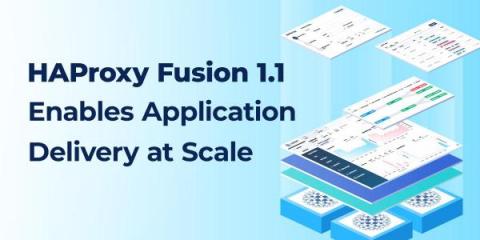
HAProxy Fusion 1.1 Enables Application Delivery at Scale

HAProxy Fusion Control Plane gives you power to simplify, scale, and secure your HAProxy Enterprise infrastructure using a centralized orchestration solution, making it easier to extend HAProxy Enterprise’s security and performance across on-premises and cloud-hosted applications. With the release of version 1.1, HAProxy Fusion is more secure, more flexible, and even easier to use.