Operations | Monitoring | ITSM | DevOps | Cloud

Root Cause Analysis in Software Testing: Methods, Techniques, and How AI Is Changing the Game

If you've ever fixed a bug only to watch it come back two weeks later, you already understand why root cause analysis matters. Patching symptoms feels productive - it's not. Getting to the actual cause is what prevents the same issue from eating your team's time over and over again. This guide covers everything you need to know about root cause analysis (RCA) in software testing: what it is, how to do it, which tools help, and where AI is taking it next.

GitKraken Explains: How AI is Changing Your Commit History

AI commit message generation is fast, accurate, and consistent. It's also missing the most important thing: the why. AI-assisted Git workflows can summarize a diff in seconds, but they optimize for description, not decision-making. In this video, we break down what AI commit messages do well, where they fall short, and how to use them without quietly erasing the context future teammates (and future you) actually need.

Making the Case for Vendor-Backed Puppet Core

Thousands of organizations rely on open source community builds for infrastructure automation. But if you're tasked with certifying, maintaining, and patching those builds yourself, you know the burden firsthand. The reality is that managing open source internally consumes time, introduces risk, and diverts resources from higher-value initiatives. When critical vulnerabilities emerge, your team scrambles to assess, test, and deploy fixes, all while keeping production environments stable.

Introducing Knowledge Discovery in InvGate Service Management

AI in Service Management promises faster resolutions and fewer repetitive tickets. In reality, its performance depends on something far less glamorous: a reliable knowledge layer. Many service desks already have the answers; they’re just buried inside resolved tickets instead of organized in a way AI can use.Turning those resolutions into structured documentation takes time that rarely fits into daily operations.

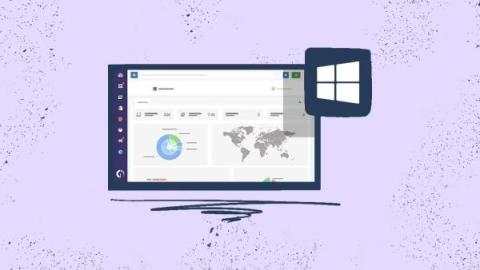
Agentless Discovery For Windows Devices: How to Set up WMI in InvGate Asset Management

Agentless discovery for Windows devices plays an important role in maintaining visibility across modern IT environments. Why? Because according to data from StatCounter, Windows accounts for about 67% of desktop operating systems worldwide, and its presence is typically even higher in corporate environments. This is where agentless discovery becomes especially valuable.

Database Governance with OPA in Harness DB DevOps | Harness Blog

Harness Database DevOps integrates Open Policy Agent (OPA) to enforce database governance through policy as code. By embedding compliance rules directly into CI/CD pipelines, teams can automatically prevent risky database changes, maintain audit trails, and meet regulatory requirements without slowing down development. Database systems store some of the most sensitive data of an organization such as PII, financial records, and intellectual property, making strong database governance non-negotiable.

The architecture advantage: Why the data layer decides the AI race

Dozens of startups are sprinting to build the next “agentic SIEM” that can autonomously detect, investigate, and respond to threats. They’re well-funded, well-marketed, but structurally hollow. Here’s what it usually looks like: an LLM layer on top of a thin orchestration engine on top of fragmented or customer-hosted data lakes. While it looks impressive in a demo, it quickly falls apart in production. Why? It’s not built on a strong foundation.

Smarter Postgres Monitoring: Compare Queries, Spot Unused Indexes, and Diagnose Waits

This is a guest post from Adrian Tan. Over recent months, we’ve been steadily improving PostgreSQL monitoring in Redgate Monitor, with a singular focus: to help Postgres users diagnose performance problems faster, with less manual investigation. The latest updates and new features tackle this problem in a few different ways.

How AI Agents Communicate: Understanding the A2A Protocol for Kubernetes

Since the rise of Large Language Models (LLMs) like GPT-3 and GPT-4, organizations have been rapidly adopting Agentic AI to automate and enhance their workflows. Agentic AI refers to AI systems that act autonomously, perceiving their environment, making decisions, and taking actions based on that information rather than just reacting to direct human input.

Release software with confidence using Datadog Feature Flags

In this technical product demo, see how Datadog Feature Flags helps teams release software with confidence by connecting every feature flag to real-time observability data. Configure progressive, multi-step rollouts with automated guardrails tied to APM, RUM, and Product Analytics so you can pause or roll back instantly if latency, errors, or key business metrics degrade.