Site reliability engineers (SREs) are involved in scaling systems and making them reliable and efficient for organizations. But SREs often fail to build system resiliency when they do not have the right tools at their disposal. In this post, we’ll uncover five leading tools that SREs can use to drive the reliability and stability of computing systems. It also examines how SREs can use the tools to improve operations tasks and infrastructure processes.
We would like to thank our loyal customers for the numerous reviews of SIGNL4! We are excited that you share your opinion on various rating platforms with other people and support us.
This has been quite the summer to remember as we continue to witness our customers achieve remarkable efficiencies through automation such as deep integrations with change pipelines to suppress alerts during maintenance windows and correlating alerts to create incidents with dynamic and evolving descriptions that dramatically improve Incident management processes.
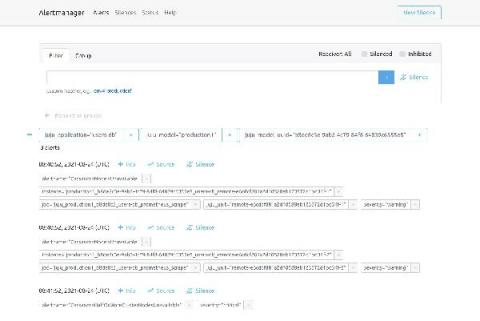
In the first post of this series, we covered the general idea and benefits of model-driven observability with Juju. In the second post, we dived into the Juju topology and its benefits with respect to entity stability and metrics continuity. In this post, we discuss how the Juju topology enables grouping and management of alerts, helps prevent alert storms, and how that relates with SRE practices.
These days, I keep encountering inquiries from various customers on the topic of call handling. Due to the current transformation, triggered by the increased use of home offices, it is becoming more and more important to make on-call staff more accessible. Often the already overloaded service desk is used for this purpose. Of course, this leads to a) a deterioration in the quality of the service desk and b) delays between the receipt of the problem and the start of problem resolution.
At Spike.sh, our mission is to help dev teams understand and resolve production issues faster. At the core of this is our Alert Reliability Engine, whose job is to make sure that a team member always gets an alert on their preferred channel. Currently, we support 7 channels - phone call, SMS, mobile push notifications, email, Slack, Microsoft Teams and Discord. We wanted to give you a peek into how we achieve high deliverability across these channels.
HR people have a saying: right person, right place, right time, meaning that the right resources can make all the difference when it counts. The same goes for Incident management and response, where very often the wrong person, place, or time can contribute to mounting catastrophe. As systems grow, the right person really can make the difference during an outage simply due to command or knowledge of the system.