Operations | Monitoring | ITSM | DevOps | Cloud

3 steps to find new revenue opportunities from your customers' digital evolutions

John Pagliuca, CEO of N-able, has taken issue in the press multiple times with the term digital transformation, preferring the term digital evolution. I agree that evolution is a better term. Digital transformation implies a one-time event; digital evolution acknowledges the ongoing nature of these changes. In short, the market will continue to change. How you adapt dictates whether you come out far ahead or remain with the status quo.

Securing XML implementations across the web

In December 2020, we blogged about security issues in Go’s encoding/xml with critical impact on several Go-based SAML implementations. Coordinating the disclosure around those issues was no small feat; we spent months emailing the Go security team, reviewing code, testing and retesting exploits, coming up with workarounds, implementing a validation library, and finally reaching out to SAML library maintainers and 20 different companies downstream.

SysAdmin Day 2021: You Are Enough

A year ago, in July of 2020, I started my SysAdmin Day post  with the words, Here we are, 12 months later, and a lot has changed, but life (and tech) continue to be extraordinarily not-normal. The challenges we face as IT pros in general and SysAdmins in particular push us to our limits daily, and there’s no hiding or sugar-coating it. In the face of all this, I’d like to offer some new thoughts for my SysAdmin family to help process the year that was and navigate the challenges to come.

Three Key Takeaways from The State of Digital Operations Report 2021

2020 heralded a year of increased complexity and customer demands, which isn’t going away. In this new normal, organizations will still be tasked with keeping up this break-neck pace. So, what did digital operations look like in 2020 compared to 2019?

Monitoring Kubernetes the Elastic way using Filebeat and Metricbeat

In my previous blog post, I demonstrated how to use Prometheus and Fluentd with the Elastic Stack to monitor Kubernetes. That’s a good option if you’re already using those open source-based monitoring tools in your organization. But, if you’re new to Kubernetes monitoring, or want to take full advantage of Elastic Observability, there is an easier and more comprehensive way. In this blog, we will explore how to monitor Kubernetes the Elastic way: using Filebeat and Metricbeat.

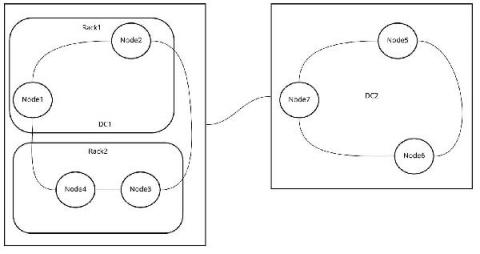
How to monitor Cassandra database clusters

Apache Cassandra is an open-source distributed NoSQL database management system that was released by Facebook almost 12 years ago. It’s designed to handle vast amounts of data, with high availability and no single point of failure. It is a wide-column store, meaning that it organizes related facts into columns. Columns are grouped into “column families.” The benefit is that you can manage data that just won’t fit on one computer.

AI in Predictive Maintenance and Forecasting

Industry 4.0 is taking every industry by storm with unprecedented advancement with innovative technology solutions. Its key technologies such as automation, AI, ML, Data Analytics and IoT enables industries to drive business operations with automated data-driven intelligence. Integrating the physical and digital systems, the manufacturing industry is increasingly adopting intelligent manufacturing in this Industry 4.0 era.

Malware alert: The RedXOR and Mamba attacks and how to defend against them

Picture this: It’s a normal day of working from home as usual since the COVID-19 outbreak. After that satisfying cup of coffee, you log in. But something is wrong. No matter how many times you click, your files don’t open. Your screen is frozen and refuses to budge. And then, you see one of the worst nightmares any IT admin can imagine: “Oops, your files have been encrypted. But don’t worry, we haven’t deleted them yet.