Whether military, a civilian agency, or even a public education institution, organizations across the public sector have witnessed a substantial increase in cyberattacks. There were a number of hits on education around this time last year, and then on health-related agencies as the COVID-19 pandemic struck. So, how do government agencies ensure their security posture is up to the task of defending against increasingly opportunistic forces of evil?
This is the second in a two-part blog series about AIOps where I sit down with Julian Dunn, Director of Product Marketing at PagerDuty, to level-set on the hot DevOps topic. The first post discussed whether AIOps was just marketing fluff and whether ITOps actually has an AIOps problem. Let’s continue…
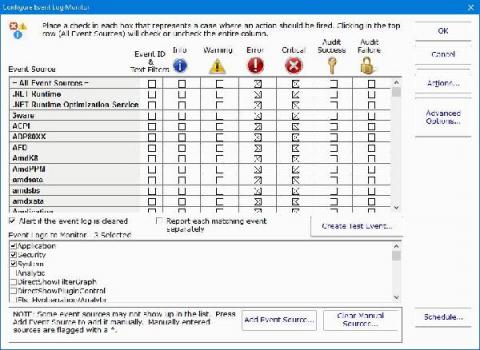
Pandora FMS is a proactive, advanced, flexible and easy-to-configure monitoring tool tailored to business itself. It adapts to all needs both in servers, network computers, devices and whatever is necessary. In this article, we will focus on Windows Server monitoring, using the software agent installed on our server.
In this two-part blog post, we’ll use Elastic Observability to monitor a sample Java application. In the first blog post, we started by looking at how Elastic Observability monitors Java applications. We built and instrumented a sample Java Spring application composed of a data-access microservice supported by a MySQL backend. In this part, we’ll use Java ECS logging and APM log correlation to link transactions with their logs.
Email communication has been around for almost as long as the Internet. But although it continues to be of the best ways to provide a personal and direct conversation, it’s also a source of pain for many. Our inboxes have become an untidy clutter of messages, where most emails either are irrelevant or spam. Prominent email service providers such as Google have done a lot to improve the experience over time.
As COVID-19 forces more employees to work from home, companies are reevaluating their cybersecurity plans to place an increased emphasis on securing remote access, as well as phishing and ransomware prevention. Here are some of the most important security basics to include in your COVID-19 cybersecurity plan.
By now, you’ve heard a number of us at ServiceNow talk about the “workflow revolution.” The COVID-19 pandemic has made businesses rethink how they operate, engage employees, and serve customers.
Splunk is happy to announce that we now have a Hashicorp verified Terraform Provider for Splunk. The provider is publicly available in the Terraform Registry and can be used by referencing it in your Terraform configuration file and simply executing terraform init. If you're new to Terraform and Providers, the latest version of Terraform is available here. You will need to download the appropriate binaries and have Terraform installed before using the provider.
Kubernetes audit logs contain detailed information about every request to the Kubernetes API server and are critical to detecting misconfigurations and vulnerabilities in your clusters. But because even a small Kubernetes environment can rapidly generate lots of audit logs, it’s very difficult to manually analyze them.