Operations | Monitoring | ITSM | DevOps | Cloud

The latest News and Information on Containers, Kubernetes, Docker and related technologies.

Easily monitor Docker Desktop containers with Grafana Cloud

18 million — that’s the number of developers around the world who use Docker, the popular tool for containerization. Docker Desktop, a software application for Mac, Windows, and Linux, is one of the most widely used tools within the Docker ecosystem, especially among developers who want to build, test, and deploy applications in containers on their local machines.

DevOps Evolution and the Rise of Platform Engineering

As we continue to see rapid technological advancements, organizations must evolve and adapt to maintain a competitive edge. The principles of DevOps - collaboration, automation, continuous integration, and delivery - have emerged as critical success factors in this landscape, enabling organizations to navigate the ever-changing environment.

DNS observability and troubleshooting for Kubernetes and containers with Calico

In Kubernetes, the Domain Name System (DNS) plays a crucial role in enabling service discovery for pods to locate and communicate with other services within the cluster. This function is essential for managing the dynamic nature of Kubernetes environments and ensuring that applications can operate seamlessly. For organizations migrating their workloads to Kubernetes, it’s also important to establish connectivity with services outside the cluster.

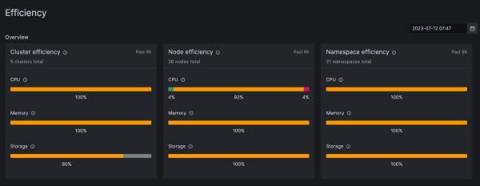
Optimizing Your K8s Nodes Using FinOps Tools? Try This Instead...

June 7, 2023 It’s no secret that Kubernetes is one of the fastest-growing technologies in use today for deploying and operating applications of all types in the cloud. It’s also no secret that Kubernetes’ popularity is a significant contributor to fast-growing cloud bills. FinOps teams are constantly looking for ways to lower their cloud spend, in cooperation with the DevOps, Engineering and App owner teams that control this infrastructure.

Using Docker Desktop and Artifactory for Enterprise Container Management

As the prevalence of containers continues to expand, managing the push and pull of containers without an enterprise-grade container registry is unwieldy. Many companies utilize JFrog Artifactory as a Docker and Helm registry, but also utilize Docker Desktop strategically to manage their container services.

Collecting Kubernetes Data Using OpenTelemetry

Running a Kubernetes cluster isn’t easy. With all the benefits come complexities and unknowns. In order to truly understand your Kubernetes cluster and all the resources running inside, you need access to the treasure trove of telemetry that Kubernetes provides. With the right tools, you can get access to all the events, logs, and metrics of all the nodes, pods, containers, etc. running in your cluster. So which tool should you choose?

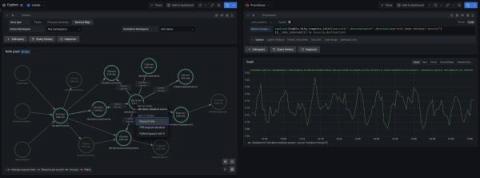
Visualizing service connectivity, dependencies, and traffic flows in Kubernetes clusters

Today, the cloud platform engineers are facing new challenges when running cloud native applications. Those applications are designed, deployed, maintained and monitored unlike traditional monolithic applications they are used to working with. Cloud native applications are designed and built to exploit the scale, elasticity, resiliency, and flexibility the cloud provides. They are a group of micro-services that are run in containers within a Kubernetes cluster and they all talk to each other.

8 Business Benefits of Ephemeral Environments

In today's rapidly evolving world of software development, ephemeral environments have emerged as a game-changer. These disposable, isolated instances for development, testing, and deployment purposes are revolutionizing the way applications are built and delivered. Let's explore the 8 business benefits of ephemeral environments and how they can accelerate development and deployment processes.

Understanding Kubernetes Logs and Using Them to Improve Cluster Resilience

In the complex world of Kubernetes, logs serve as the backbone of effective monitoring, debugging, and issue diagnosis. They provide indispensable insights into the behavior and performance of individual components within a Kubernetes cluster, such as containers, nodes, and services.