Operations | Monitoring | ITSM | DevOps | Cloud


The latest News and Information on Monitoring for Websites, Applications, APIs, Infrastructure, and other technologies.

The Complex But Elegant Relationship Between AIOps and Observability
Digital transformation requires organizational evolution. Constant demand for rapid delivery of upgrades and new products forces change. Surely, the old days of managing monolithic applications housed in private servers are over. Applications consist of virtualized, containerized, and serverless code that’s networked via APIs across a hybrid infrastructure of public and private clouds.

Introducing Logz.io's New Metrics Integration for HashiCorp Consul with OpenTelemetry
HashiCorp Consul began as an open-source project for service discovery. It has evolved to provide other valuable functionality like secure service mesh to help secure microservice architectures based on service identity, but also the ability to achieve repeatable application deployment lifecycles via Network Infrastructure Automation and control access to the service mesh via Consul API Gateway.These features are considered the four core pillars of Consul service networking.
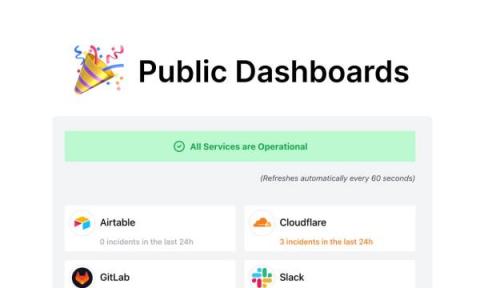
Share your status dashboards with your team and customers
We’ve just released a new feature! Presenting Public Dashboards. It is one of the most requested features in the last 6 months. People wanted to have an easy way to share the dashboard with their team and customers. Now it’s possible! And the best news is that it is accessible to every plan.

Optimize your .NET application performance with the Datadog Continuous Profiler
.NET is a framework built by Microsoft that simplifies the complexities of developing cross-platform applications. Using.NET, developers can create powerful applications with rapid response times and more. We’re excited to announce that the Datadog Continuous Profiler now provides general support for.NET applications, including.NET Framework, .NET Core, and.NET 5+.
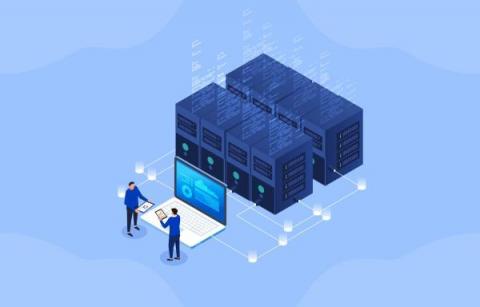
Benefits of Apache web server monitoring tools
Incorporating Apache web server monitoring into your IT infrastructure management strategy can help identify performance bottlenecks preemptively. This proactive monitoring approach provides data necessary to ensure that your web server is up to the task and make optimizations if needed. Guaranteeing your customers a smooth and hassle-free user experience could go a long way into cementing their trust towards your organization.

PostgreSQL Monitoring Upgrade

How to get complete CI/CD pipeline observability
It's not like it used to be back in the day! Before CI/CD, we were building on-premises, service-oriented products following system style architecture and we were able to map out the build system and end-to-end process in a PowerPoint or Visio document. Although time-consuming and inefficient, it was relatively straightforward and the build pipeline was unlikely to change drastically. But that's no longer the case.

The Complete Kubectl Cheat Sheet [PDF download]
Kubernetes is one of the most well-known open-source systems for automating and scaling containerized applications. Usually, you declare the state of the desired environment, and the system will work to keep that state stable. To make changes “on the fly,” you must engage with the Kubernetes API.