The Digital Experience Score: Solving Logon Time Issues
Discover how Nexthink's Digital Experience Score (DXS) can help solve your users' logon time issues.


The latest News and Information on Monitoring for Websites, Applications, APIs, Infrastructure, and other technologies.
Most Citrix professionals are well aware that when desktop or application performance is slow, the first finger tends to get pointed at the Citrix team. But even for complex ecosystems like Citrix, ITIL guidance like a Service Desk continues to be a long-standing ‘best practice’ and can help if IT staff work together. This post will outline some of the ITIL guidance from the perspective of eG Enterprise and a Citrix-based digital workspace.
More than 150 monitoring maniacs found their way to the location. For another year Kalkscheune was the venue for the Icinga Camp Berlin. Among those maniacs were many well-known faces, but also surprisingly many new ones. A lot of talks and discussions and besides tasty food, you could also grab an Icinga shirt from the newest collection. As usual the event started with pretzels, coffee and a quick kick off from Icinga CEO Bernd.
(Head Office: Minato-ku, Tokyo; Representative: Yukihiro Makita, President; hereinafter “JBS”) has adopted OpsRamp, an operation platform suitable for Microsoft’s cloud services as an operation platform for its enterprise outsourcing service, the MATRIX for Managed System Services, and renewed its services on January 29, 2019.
Whenever I wake up in the morning, the first thing I do is… well… not go over last night’s notifications on my phone. This has taken a while to get used to, but I am happy I did it. And it’s been a few years now. The first thing I do is get up and go to the bathroom. Then, I go into the kitchen, and brew my first coffee of the day. While the coffee is brewing, I raise the window rolls, turn on some music, and make sure everything is ready to have a great start to the day.
You’re in the process of creating and launching new softwareand you want it to be as stable as possible. Or, maybe your software has been running for a while, but you’re frustrated with the bug-reporting workflow in place. Either way it’s time to look for a crash reporting process that fits your application. This leads to a natural question: Should we build it? Or should we buy it?
This is a run down on the basic multi-tenant SaaS data model underlying Checkly. Users, accounts, plans, that type of stuff. When building this, I found it surprisingly hard to find any solid info in the gazillions of developer and startup blogs; most where just to vague on the implementation details.
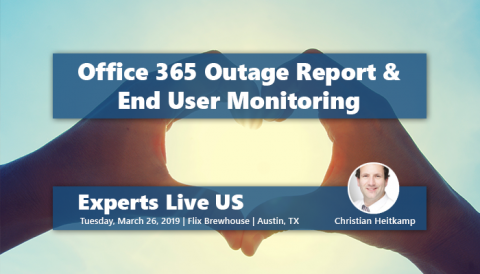
Experts Live is one of the largest community conferences with a focus on a broad range of Microsoft technologies including Azure, Office 365, Intune, System Center, Automation, Virtualization (Azure Stack, Docker), and Enterprise Mobility + Security, just to name a few. Top experts from around the world present discussion panels, ask-the-experts sessions and breakout sessions, and cover the latest products, technologies and solutions.
IBM MQ is enterprise-grade message-oriented middleware (MOM). Previously known as MQSeries and renamed to WebSphere MQ, IBM MQ is known for its stability and reliability. Companies in industries ranging from financial services to retail to aviation use it as an integral part of their backend infrastructure. Datadog’s new IBM MQ integration enables users to collect key metrics and logs from their IBM MQ instances and visualize them with a customizable out-of-the-box dashboard.