Automatic monitoring of Laravel Forge managed sites
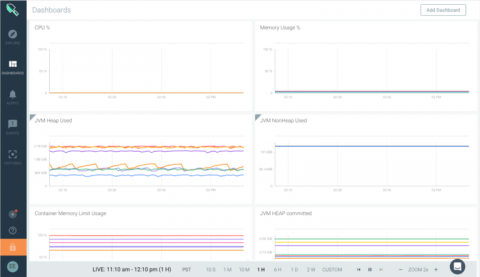
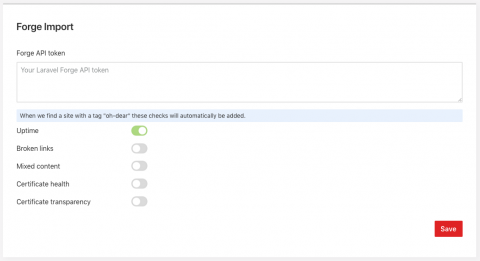
Today we're launching a cool feature for our users on the Laravel Forge platform: automatic monitoring of any of your sites and servers managed through Laravel Forge!


The latest News and Information on Monitoring for Websites, Applications, APIs, Infrastructure, and other technologies.
Today we're launching a cool feature for our users on the Laravel Forge platform: automatic monitoring of any of your sites and servers managed through Laravel Forge!
As Cota Healthcare moved to Kubernetes on Google Cloud, it chose Sysdig for Kubernetes monitoring and container security. With Sysdig, Cota accelerates healthcare service development, improves capacity planning, fixes issues rapidly, and strengthens its security posture.
Sentry introduced (welcomed) support for minidump crash reports earlier this year. In this post, Tim Fish, an essential contributor and co-maintainer of Sentry’s Electron SDK, explores his own experience with the intersection of minidumps and Electron.
WordPress is an open source blogging and website creation tool written in PHP and MySQL. It is a highly flexible content management system (CMS) that enables you to build and manage your website using just your web browser. According to a W3Techs survey, WordPress is used by 31.8% of all websites.
Let’s begin with a little thought experiment. Imagine you’re responsible for the next release of your company’s flagship product, and today is the big day: you’re about to give a demo presentation for all the big shots in the company. The CTO is obviously there, since she’s your boss. The CEO is there as well, along with the VP of Marketing and some of the company’s investors. So, that’s your boss, your boss’s boss, and the moneymakers.
Even the most complicated technologies should be user-friendly.
We recently implemented a Spark streaming application, which consumes data from from multiple Kafka topics. The data consumed from Kafka comprises different types of telemetry events generated by mobile devices. We decided to host the Spark cluster using the Amazon EMR service, which manages a fleet of EC2 instances to run our data-processing pipelines.