Most of what people mean when they ask "how does this actually work" comes down to three words used precisely: workflow, run, and gate. This is what each one is, and how they fit together.
You get a Slack message from the VP of Sales: They have asked an AI agent connected to Snowflake for the past quarter’s revenue and the numbers look wrong. First, you verify the agent’s query and, when that looks fine, check the pipelines that populate the underlying table. All jobs completed, the data is recently refreshed. Then it’s time to check the logs for errors. Nothing.
How on-demand Android environments turn validation into a repeatable pipeline stage In the first article, we looked at automation: how Android environments can be created and managed programmatically. In the second, we looked at scaling: how shared infrastructure can make those environments available to more developers, tests, and workloads. This third article looks at the next step: integrating those environments directly into CI/CD.
What happens when a software engineer who has put their entire identity into being the resident expert of an obscure technology or language with ten years of experience and who knows the codebase like the back of their hand now has to compete with AI? Psychologically speaking, according to Dr. Cat Hicks, author of The Psychology of Software Teams and founder of Catharsis, that's called identity threat, and it's a surefire way to feel unsafe. We were honored Dr.
It's been a while since I last updated you on what's new in OnlineOrNot. For the most part, I've continued making it useful for software teams: there's now an MCP server, I've improved the terraform provider significantly, and there's a new TypeScript SDK. You can also (finally?) monitor DNS/TCP with it.
TL;DR Have you ever set out to push an allegedly 15-minute fix that ended up taking multiple weeks, without even a guarantee that it would actually work? It’s happened to the best of us during our professional journeys, but this time, the story is about Apache Kafka.
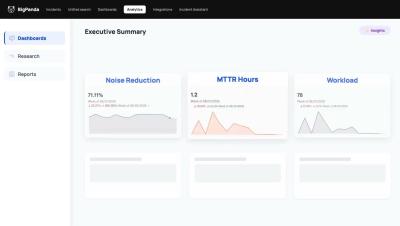
See how BigPanda Analytics turns IT operations analytics into instant answers, no hand-built reports required. IT leaders are used to waiting on a report someone on the ops team had to hand build, and every follow-up question starts the cycle over again, while the business keeps moving. This demo shows how IT executives get direct access to IT operations analytics: prebuilt dashboards, AI-powered insights, and a natural language research tool that answers questions in real time.
A P1 ticket sits before anyone notices it's close to breaching. A config change goes out and three days later nobody can say for sure who signed off on it. The information exists somewhere — an email thread, a spreadsheet, someone's memory — but not on the ticket itself, which means by the time you go looking, it's already a bad conversation with a client or an audit finding waiting to happen. What you'll learn.