Operations | Monitoring | ITSM | DevOps | Cloud

Do You Need an Alert for Your Alerts? Building Smarter Monitoring Systems

Traditional systems monitoring solutions poll various counters (typically simple network management protocol [SNMP]), pull in data and react to it. If an issue requiring attention is found, an event is triggered—perhaps an email to an administrator or the firing of an alert. The admin subsequently responds as needed. This centralized pull approach is resource-intensive. Due to the pull nature of the requests, it results in data gaps and data that may not be granular enough.

No pants, no problem: Employees Report More Work Yet More Satisfaction in the Everywhere Workplace

“We want to work remotely.” That’s the major takeaway from Ivanti’s just-released survey on the Everywhere Workplace. Nearly 2,000 consumers across the U.S. and U.K. responded. While most of them were abruptly shifted into remote work due to circumstances outside their control – and those circumstances were scary and confusing – there has been a silver lining. They’re happier at home.

That One Time Using APM Bit Us

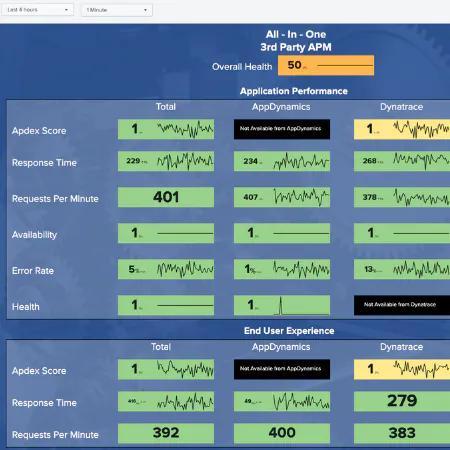
At Catchpoint, our mission is to provide customers with actionable data that will help them reduce MTTR and maintain a positive digital experience. We measure "from where the users are" to ensure the data reflects real end-user experience. As someone that's part of the Catchpoint on-call chain, this is extremely important to me. I do not want to be woken up at 2 AM because a server is misbehaving, only to find out that the application failed over gracefully and no users were impacted.

New in Elasticsearch 7.13: Even faster aggregations

In our last episode, I wrote about some speed improvements to date_histogram and I was beside myself with excitement to see if I could apply the same principles to other aggregations. I've spent most of the past few months playing a small part developing runtime fields but eventually I found time to take a look at the terms aggregation.

Cerner depends on Elastic machine learning for a healthy infrastructure

Cerner Corp. is a supplier of healthcare information technology systems, services, and devices. The company, with $5.7 billion in annual revenue, empowers people and communities to engage in their own care. A key aspect of the business is surfacing data to enable their clients to make informed decisions about their healthcare. The 29,000 Cerner employees in 30 countries are on a mission to shape the healthcare of tomorrow.

Introducing Sensu

Since 2010, it has been Sumo Logic’s mission to democratize machine data. Naturally, we tend to focus on the outcomes: reliable and secure applications and systems that are the engines of successful modern businesses. But to drive these outcomes, and before the spotlight-hogging analytics kick in, algorithms require data. And this is where the magic starts! Sensu has been working on championing a monitoring as code approach to building observability pipelines for a decade now.

Sensu to be acquired by Sumo Logic

I am excited to announce that Sensu has entered into an agreement to be acquired by Sumo Logic (Nasdaq: SUMO), the pioneer in continuous intelligence. The acquisition will complement Sensu’s observability strategy by providing customers with a mature and comprehensive Observability Suite including log management, observability data platform, analytics, visualizations, and more.

Meeting Recordings app: Overcome Zoom fatigue and FOMO

The pandemic made Zoom ubiquitous. Everyone from preschoolers to CEOs use it to meet with others. Much of what we used to do by walking down the aisle, boarding a plane, or entering a classroom can now be handled on a Zoom call. Remote work has given rise to another trend: the fear of missing out (FOMO). At many companies, employees move from one Zoom meeting to another, forcing them to choose between Zoom fatigue and FOMO.

Kudos, You've Earned a Digital Experience Monitoring Reward!

Digital experience has existed for a while now. We have now begun to scratch the surface to measure it. So that calls for Digital Experience Monitoring (DEM). DEM extends Application Performance Monitoring (APM) and Network Performance Management (NPM) to view and optimize application performance issues from the end-user perspective.