Operations | Monitoring | ITSM | DevOps | Cloud

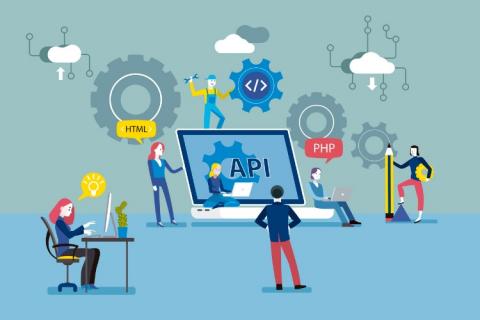
The Ultimate Guide to Accessing & Using APIs

Application programming interfaces (APIs) are interface software programs that enable applications to communicate with one another through a series of protocols and definitions. They offer a standardized and secure way for apps to work together and provide the functionality and information requested without user intervention. You can think of an API as an entry point for an app or website.


Azure Data Lake Storage: Analyzing Key Factors and Costs for Optimized Storage Solutions

Azure Data Lake Storage (ADLS) is a highly scalable and cost-effective storage solution provided by Microsoft Azure for big data analytics. ADLS can handle structured and unstructured data, making it a popular choice for businesses looking to optimize their cloud storage management. In this article, we will provide a comprehensive analysis of the key factors that impact costs in Azure Data Lake Storage.

The future of observability: Trends and predictions business leaders should plan for in 2023 and beyond

If the past year has taught us anything, it’s that the more things change, the more things stay the same. The whiplash and pivot from the go-go economy post-pandemic to a belt-tightening macroeconomic environment induced by higher inflation and interest rates has been seen before, but rarely this quickly. Technology leaders have always had to do more with less, but this slowdown may be unpredictable, longer, and more pronounced than expected.

Modern organizations need an intelligent digital platform

In the face of macroeconomic challenges, the tech strategy has in many cases become synonymous with the business strategy. Organizations need to do more with less, transform their business models to grow revenue, and gain a competitive advantage to weather this storm. Ultimately, those that can find ways to accelerate the business impact of their technology investments will be best positioned for long-term resilience.

Meet the minds behind Grafana Pyroscope: Christian, Cyril, Dmitry, and Ryan

What do you get when you combine the wit, wisdom, and weird humor of four talented tech minds? As it turns out, a surprisingly lively Q&A! As Grafana Pyroscope emerges from the union of Grafana Phlare and Pyroscope, it’s time to really get to know the people behind these continuous profiling projects. That’s why we brought together the Pyroscope founders, Dmitry Filimonov and Ryan Perry, and Phlare technical leads, Cyril Tovena and Christian Simon, for this light-hearted conversation.

How to Benchmark Cloud FinOps Effectively

Cloud FinOps is rapidly becoming popular among organizations in today’s digital age due to its ability to help manage financial operations more efficiently. This is because it allows organizations to track, measure, and optimize their cloud spend with greater visibility. It also helps improve operational efficiency by automating numerous financial processes, including billing, budgeting, auditing, and reporting.

The Ultimate Guide to Digital Workplace Observability

The digital workplace has evolved dramatically over the past decade, both in terms of the increased reliance on technology for daily operations and the complexity of that technology. In order to manage an improve the digital workplace, service desk teams need more than just a comprehensive view of their IT environments — they need to be able to analyze that data in real-time to make faster, more continuously effective decisions. Enter: digital workplace observability.

How Are SASE and SD-WAN Related?

SD-WAN and SASE both build on traditional network models, such as those used to connect a company’s offices. While the two models share some features and advantages, they have different structures and approaches. In the simplest terms, an SD-WAN inspects and routes data more efficiently, while a SASE combines networking and security functions into a single service. Here’s what you need to know.

N-central Patch Monitoring Best Practices and Recommendations

The best part about patching in N-able N-central is the ability to fully automate the process, but even if that is accomplished correctly there is still a need to have the right amount of sensitivity of patch monitoring in place. I have always monitored patches in terms of age, I did so with WSUS v3 (15 years ago) and have always done so in N-central.