Operations | Monitoring | ITSM | DevOps | Cloud

AI Dev Tools: What 100K Engineers at Google Really Taught Us

AI developer productivity, agentic workflows, and the lessons learned running engineering tools for 100,000+ software engineers at Google. John Montgomery, CCO at GitKraken, sits down with Asim Hussain, co-founder of Alterion AI and former Google VP of Engineering Productivity, to get real about what AI actually changes for engineering teams in 2025.

Federated Search | From Silos to Insight | Azure Blob Schema Discovery with Splunk's Crawler

This walk-through shows how Splunk's Cloud can discover schema and partition keys for Microsoft Azure Blob Storage datasets and create searchable Splunk managed tables. Once the data is mapped, analysts can use Splunk Federated Search to query Azure Blob data where it lives, bringing cloud-resident logs into security, observability, and operational work-flows without re-ingesting the data.

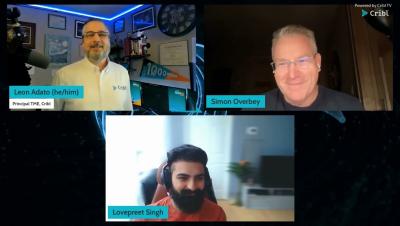
The Observability Journey: Getty Images and Cribl

I recently sat down with Simon Overbey and Lovepreet Singh - the Engineering Manager and systems engineer (respectively) at Getty Images to talk about their experiences implementing Cribl. After getting a rundown of the pre-Cribl environment (described above) I asked to jump straight to the end, the net benefits. If the "before" was a terrifying tidal wave of cost and complexity, what did the "after" look like?

How to deploy Canonical Managed Kubeflow on Microsoft Azure?

Learn how to deploy Canonical Managed Kubeflow on Microsoft Azure step by step. Canonical's Managed Kubeflow on Azure gives enterprise and startup AI teams a fully operational, open source MLOps platform in under an hour. It is managed 24/7 by Canonical's engineers. This means you can focus entirely on building models rather than running infrastructure.

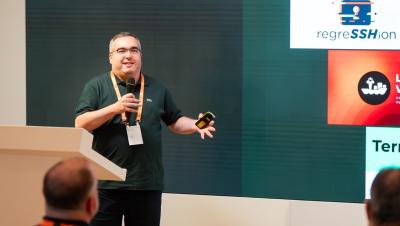
Massive Open Source Success: A Step-By-Step Guide | Ubuntu Summit 26.04

Not all open source projects gain traction -- but a few become movements. In this talk, Nariman, Founder of Puter, shares what actually separates the two, based on his experience of growing Puter to 40K+ stars, gaining hundreds of contributors, and over 500K installations. He breaks down how to gain momentum from a project's foundation, attract contributors, and design projects that capture the imagination.

AI Spend Hit $297B. Nobody Knows Where It Goes.

AI spend doubled to $297B in two years — and most companies can't tell you what any of it shipped. Token spend is disconnected from outcomes on the dev side. Agents in production? The invoice is the only signal. Harness Cloud & AI Cost Management (CACM) gives teams unit economics at the inference level, cross-provider visibility across OpenAI, Anthropic, Bedrock, and Vertex AI, and request-level attribution to the agent, session, or workflow that triggered the spend.

What's New in Tempo 3.0

Tempo 3.0 introduces a major architectural shift that decouples the read and write paths, with Kafka handling durability on the write side and a new live store serving recent traces on the read side. Blocks are now written at a replication factor of one instead of three, significantly reducing storage overhead. This release also brings TraceQL metrics to general availability, adds comparison operators for filtering metric results at query time, and introduces a new Tempo CLI redact command for removing sensitive trace data on demand without waiting for retention to expire.

Inside the Grafana AI Team Weekly: AI Observability for the OTel demo and LLMSpec (May 12, 2026)

This is an excerpt from a real AI team weekly meeting where we talk about the stuff we build and occasionally also demo them! In this one, Principal Software Engineer Sven Großmann demos how he integrated AI Observability into the OTel demo, complete with the guards feature he introduced last week, and Principal Software Engineer Yas Ekinci gives a rare glimpse of LLMSpec, the internal counterpart of the o11ybench benchmark that we use to evaluate Assistant.

ER-to-Physician Communication Workflow: Healthcare Critical Alerting Case Study

When a nurse calls for help, every second counts. ER nurses juggle a lot: admission decisions, discharge approvals, orders, physician consults. When they need support fast, they can't afford to chase down the right person manually. Here's how one physician-led medical group solved it using OnPage: Nurses leave a voicemail on a single intake line It's automatically routed into OnPage as an alert to the on-call triage coordinator.