Operations | Monitoring | ITSM | DevOps | Cloud

The latest News and Information on Monitoring for Websites, Applications, APIs, Infrastructure, and other technologies.

Kelsey Hightower and Shipa for Kubernetes: A Fireside Chat

On October 22, 2020, Shipa launched a new web series called “Coffee & Containers.” C&C was conceived as a place for practitioners and IT leaders to learn and collaborate on all things microservices, cloud-native, containers, Kubernetes, etc. We were very proud to launch this series with Kelsey Hightower, Thought Leader and Developer Advocate at Google Cloud Platform, and Bruno Andrade, Founder and CEO of Shipa.io.

OpsRamp Gives a Boost to Netflow and UC Monitoring

The modern enterprise network is akin to the transcontinental railroad system in the United States in the early 20th century: it was far-reaching and commerce depended upon the reliability of the rail service connecting crucial goods with Americans in every town and city. Likewise, networks today are intrinsic to commerce (and daily life) yet they are entangled and multi-layered.

Running InfluxDB 2.0 and Telegraf Using Docker

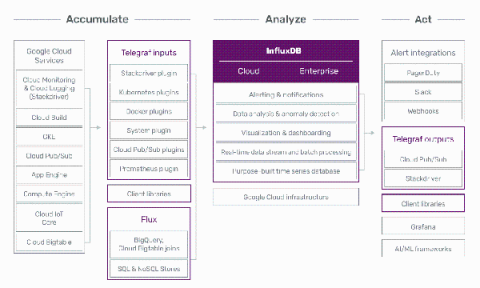
While the Docker buzz has faded a bit, replaced by new words like “Kubernetes” and “Serverless”, there is no arguing that Docker is the default toolchain for developers looking to get started with Linux containers, as it is fairly ubiquitous and tightly integrated with a variety of platforms.

Important API metrics you should monitor

In this article, learn which API metrics you should watch and how Uptrends’ API Monitoring can help you with API tracking and reporting. It is important to know the availability, speed, and validity of API responses whether you publish an API for consumption or your website or app relies on one or more APIs. If an API slips in any of those areas, you’ve got potential trouble. Uptrends API Monitoring has multiple ways to enable you to safeguard your APIs.

Solr Performance: Troubleshooting Solr Slow Queries Using Logs and Metrics

Let’s say you get an alert that one or more queries is slow. Or that your users complain, whichever comes first 🙂 We’ve all been there… How do you find the root cause for this slowness and then fix it? In this article, I’ll go through my usual thought process: first, I’d try to find which queries are slow. Then, I’d dig deeper: Let’s take a specific example and run through each step.

Network Monitoring Enhancements - VirtualMetric Presents New Product Capabilities

As a customer-focused company, which pays a lot of attention to its client’s needs and requests, while keeping pace with the market dynamics, VirtualMetric has always followed the approach of continuous product development. Our ongoing improvement process allows us to develop, test and release new features and product capabilities of your all-in-one monitoring software at short time intervals.

Truly Doubling Down on Open Source

A couple of days ago, Elastic announced that it will change the licensing of Elasticsearch and Kibana as of the 7.11 release to a proprietary dual license (under the SSPL license) and away from the open-source Apache-2.0 license. This move has caused extensive turmoil and frustration in the open-source community, especially with organizations that rely on Elasticsearch. Let me start with the end in mind.

A Gem of an Update: Performance Monitoring for Ruby

In order to continuously improve your Ruby application, you need to understand everything your code touches. That means visibility into how your frontend responds to the database queries that are central to your Ruby application. Sentry’s new Ruby SDK collects and monitors the data surrounding your traces, logs, and key metrics. With it, you now have the context to connect backend issues to frontend performance.