Operations | Monitoring | ITSM | DevOps | Cloud

The latest News and Information on Monitoring for Websites, Applications, APIs, Infrastructure, and other technologies.

Going from Consulting to SaaS

For many freelancers and small business owners, moving from consulting or freelance development work to operating a SaaS product is the Holy Grail. That makes sense: running a SaaS scales better and makes for a stable income. While there’s no guaranteed path to success, here’s what we learned taking AppSignal from a “20% time side-project” to a business serving thousands of developers around the globe. This article isn’t a blueprint.

How To 'Translate' Grafana Dashboards from Graphite to Elasticsearch

Grafana is the de facto open source tool for visualizing metrics. Grafana supports many different backends for data sources and handles each one slightly differently. This blog post is geared towards helping convert Grafana dashboards from using the Graphite backend to using Elasticsearch as a metrics datasource. There are many similarities between how to use both as datasources and how to plot graphs around them, but there are also many differences that need to be accounted for.

Measuring First Input Delay (FID)

First Input Delay (FID) measures how long the browser took to respond to the first user input event. It’s one of several Core Web Vital metrics that measure how real users perceive the performance of modern web applications. New measurements like First Input Delay are increasingly important as JavaScript and SPA’s do more work on the client side.

Integration of PRTG and Flowmon

Get the most out of PRTG and Flowmon by bringing them under one GUI and allowing their complementary functionalities to work together. Until recently, infrastructure and network monitoring were seen as rivals, but today they are rather viewed as complementary technologies. Seek proof with Gartner - they used to be pitted against each other in the Magic Quadrant, but that has now been replaced by the Market Guide, which explains the differences and strong points but does not compare.

Track, Debug, and Fix Errors with Sleuth and Sentry

Developer teams shipping software frequently are in a constant state of change. Understanding the state of their code at a given point of time is sometimes clear as mud. The Sentry | Sleuth integration is focused on helping developers automate the annoyances of deploying software, tracking the health of a release, and providing clarity on how to resolve critical code issues.

Digital Transformation: Strategies for Success from Top Tier Enterprises

In our last post on Catchpoint’s 2020 CIO New Normal Survey we talked about how COVID-19 is driving a “reverse industrial revolution” that is fueling a mass exodus from America’s biggest (and most expensive) cities. This week, we focus on a more pragmatic set of findings: the IT lessons that we can learn from those American enterprises that have fared the best during the COVID-19 pandemic.

SRE + Honeycomb: Observability for Service Reliability

As a Customer Advocate, I talk to a lot of prospective Honeycomb users who want to understand how observability fits into their existing Site Reliability Engineering (SRE) practice. While I have enough of a familiarity with the discipline to get myself into trouble, I wanted to learn more about what SREs do in their day-to-day work so that I’d be better able to help them determine if Honeycomb is a good fit for their needs.

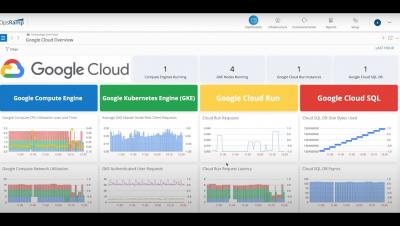
OpsRamp Forges New Partnership with Google Cloud

Google Cloud is growing marketplace traction with enterprise customers as an innovative, service-rich option for multi-cloud environments. The public cloud platform, known to be a developer’s favorite, has solutions by industry and comprehensive offerings in artificial intelligence, analytics, DevOps and high-performance computing among others. Today, OpsRamp announced a partnership with Google to bring hybrid discovery, monitoring, and automation to Google Cloud customers and partners.

Subnetting: What it is and How it Works

Subnetting isn’t hard but I often see even experienced network engineers looking for subnet calculators or trying to count in binary on their fingers. So how about a quick primer? To understand subnets, remember what a subnet is and think about the IP address in binary. A subnet is a range of IP addresses. All the devices in the same subnet can communicate directly with one another without going through any routers.

Community Highlight: How InfluxDB Enables IoT Sensor Monitoring of Aquariums

I recently spoke with Jeremy White who is using InfluxDB to monitor his aquariums. By collecting IoT sensor data, he has been able to better understand his 200 gallon salt-water aquarium full of fish and coral. The entire project can be found on GitHub. Caitlin: Tell us about yourself and your career. Jeremy: I’m a Senior Network Automation Consultant at Network to Code, and my background is in networking engineering. Network to Code is an industry leader in network automation.