Operations | Monitoring | ITSM | DevOps | Cloud



Speedchat #001 "Dogfooding and Software Product Management" w/ Leonid, Matt - March 2021

SpeedChat: Product Management and Eating Dog Food
Speedscale ‘SpeedChat’ Episode 1: Discussing software product management, ‘dogfooding’ and scaling quickly for product/market fit without breaking things.

Better Customer Operations Equals Increased Company Revenue
Customer operations refer to customer-centric business functions like sales and service which extend support to the customer. These were earlier perceived to be a cost center, but that notion has changed over the past decade. Customer operations are now regarded as the Swiss army knife of business operations. This is largely due to the fact that it supports several core business functions such as Sales, Marketing, Branding, and Product Development.

Introducing Open Source Fridays
We’re excited to share that Mattermost has launched Open Source Fridays as a way to help our Engineering team have a structured opportunity to support and get involved in more open source projects inside and outside of Mattermost.
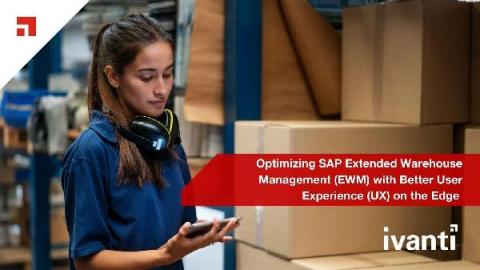
Optimizing SAP Extended Warehouse Management (EWM) with Better User Experience (UX) on the Edge
Optimizing SAP Extended Warehouse Management (EWM) with Better User Experience (UX) on the Edge While technology plays a large part in the efficiency of warehouse operations, employees are the foundation. Prioritizing User Experience (UX) on employees’ mobile data entry devices, from handheld devices to fork truck-mounted barcode scanners, is crucial to maximizing productivity.

Top VMware Horizon Performance Challenges for VM Administrators
Over the last year, most organizations have deployed or expanded digital workspaces to support employees working from home. One of the most popular technologies for digital workspaces is VMware Horizon. In this blog, we discuss the top performance challenges that administrators of VMware Horizon deployments have to tackle.
How To - Improve Your Secure Web Gateway Rollout With Endpoints
The principles of network security didn’t change overnight, but our abrupt transition to a remote workforce dismantled traditional concepts of how we secure our network. Offices were designed for people to access their resources on-site or through a few well-defined locations; security took the form of inline firewalls, web gateways, and VPNs that were routed through a datacenter or other resource hub.

Phoenix Project: Sometimes you have to look back to look forward
It has been eight years since The Phoenix Project was published and a lot has changed since then! I started to think about what we’ve learned in that time. It starts with the theory of constraints. I still see it all the time. Organizations take actions which are merely temporary, putting out fires but not solving for the underlying causes of those fires.

Is the Data Center Dead?
Hybrid IT is here to stay. As companies are moving to the cloud faster than ever, fueled by necessity during the pandemic, enterprise IT organizations must determine how to shift operations accordingly. Managing highly-distributed, multi-cloud IT environments is the new norm.