Mailchimp
Not subscribed to OpsMatters Newsletter


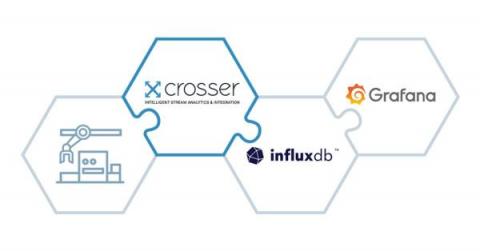
Crosser is a Swedish company that builds a streaming analytics platform. The idea behind Crosser is to take the data from a connected, sensor-rich world and integrate it in real time to deliver faster insights and innovation. Primarily focused on the industrial IoT (IIoT) space, Crosser helps manufacturers gain insight into their machines and processes to drive improvements and to take advantage of newer trends and requirements that companies have for their data.
I love automation. Seriously, what could be more satisfying than tricking a machine into doing all the things you don’t want to do using only the power of your mind? Paying bills, brewing coffee, making appointments, ordering food… it’s like being Tom Sawyer without all the manipulation and questionable ethical choices.
Azure storage accounts offer powerful, cost-effective options for managing your data and applications. With various services such as blobs, queues, files, and tables, you can use Azure Storage to store and access virtually limitless amounts of data effectively. This guide will walk you through all the basics of setting up and using an Azure Storage Account.
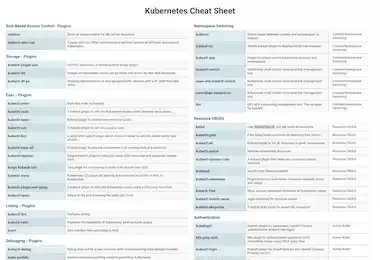
In the world of container orchestration, Kubernetes has become the de facto standard. Despite its simplicity in some respects, it has also introduced new levels of complexity in the deployment and management of distributed applications and services. To assist you with understanding the most common kubectl commands & plugins, we've created a cheat sheet as a reference for operations engineers, software engineers, and cloud infrastructure managers who use Kubernetes primarily.
Over the past year, the job market has experienced a great amount of fluctuation, with more people joining and leaving companies than in years prior. There are a few reasons why you may be seeing a constant flow of new employees and have been on more goodbye happy hours than usual.
Kubernetes monitoring can be difficult and complex. In order to determine the health of your project at every level, from the application to the operating system to the infrastructure, you need to monitor metrics in all the different layers and components — services, containers, pods, deployments, nodes, and clusters.