Mailchimp
Not subscribed to OpsMatters Newsletter


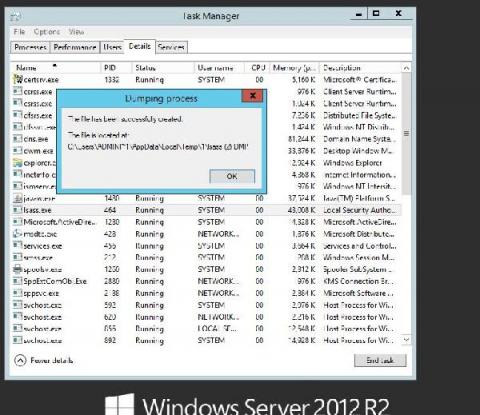
Most of the time, threat actors in the cybersecurity landscape don’t employ advanced techniques and tools to intrude and establish a foothold within networks. Often, they disguise malicious operations by mimicking the activities of legitimate users, leaving behind little to no footprint. Blending malicious actions with day-to-day IT activities helps attackers maintain a low profile and remain undetected for a longer period.
Azure IoT Edge is a Microsoft Azure service that allows you to run containerized workloads on IoT devices. With IoT Edge and Azure IoT Hub, Azure’s device-management platform, organizations across science, manufacturing, energy production, and other industries can provision their IoT devices and workloads at the edge of their cloud networks for immediate in-unit computing, a necessity when running AI algorithms or parsing large datasets directly on IoT devices.
All IT support teams know that problem management is used to identify the root causes which help to permanently resolve recurring incidents and follows specific steps like: However, problem management still remains an underrated, underutilized process which is mostly used together with incident or change management process. Problem management, out of all the ITSM processes has one of the lowest adoption rates.
Our New Year’s resolution is to continue to improve the legendary cross-platform GitKraken Git GUI, and we’re starting off with a bang. 🎉 We bring you, GitKraken v7.5.
Regulatory compliance is time-consuming and expensive. A recent survey of IT security professionals found that, on average, organizations must comply with 13 different regulations and spend an average of $3.5M annually on compliance activities, with audit-related activities consuming 232 person hours per year. With a team of five people, that adds up to 1.5 months a year devoted to audit-related activity. That’s a lot of hours that could have been spent on initiatives driving customer value.
DevSecOps — or the merging of Ops and Security — has been at the center of discussion for the better part of the outgoing decade. Today, the complexity of infrastructure change, demands security and DevOps teams to work together more efficiently. But there are hurdles to adoption of DevSecOps as a methodology. Cloud-native applications often live in multiple clouds across data centers, co-location, and public clouds.