Mailchimp
Not subscribed to OpsMatters Newsletter


What is AIOps? Are you confused by all the different explanations out there? Regardless of the mixed messages, there is a correct definition and approach for AIOps.
Today we share a recent conversation with Kris Cowles, Vice President, Global Applications IT at Topcon Positioning Systems, a 2,000-person division of Japanese company Topcon. Previously, Kris worked as the Director of Engineering Operations at Cisco. She discusses some of the growing pains of working with SaaS vendors and how she’s making it work.
For many years WordPress has invariably remained the CMS number 1, supporting about half of the world’s websites. All hosting service providers declare compatibility with WordPress – and in most cases this is true. WordPress has no excessive technical requirements. However, it can’t be denied that WP-based websites work better than elsewhere on the servers of certain providers. WordPress will work properly on any Apache or Nginx-based web hosting with a MySQL or MariaDB database.
In today’s fast-growth, faster-results market, your customers expect your applications to be always available and up-to-date. Meeting that demand often involves migrating to the cloud, which offers increased scalability and flexibility, allowing engineering teams to innovate more quickly and produce the delightful user experiences customers are looking for.
Here at ServiceNow we think people should be able to work the way they want to, not according to the rigid dictates of legacy software. Thanks to the Now Platform, help is on the way. The Now Platform Orlando release features new AI and analytics capabilities designed to make work, work better for people. We call this group of capabilities Now Intelligence. Now Intelligence enhances IT, employee, and customer workflows, so every department in your company can work smarter and faster.
At InfluxData, we love the community! Our amazing open source members are an integral part of InfluxData and have been since its founding. They’ve helped us build amazing products for time series data. This is a quick update to give you some insight into how we track metrics about our community and ensure we are building products and features that our users want to see.
Tags provide critical context for troubleshooting issues across any dimension of your environment. By applying best practices for tagging your systems, you can efficiently organize and analyze all your monitoring data, and set up automated multi alerts to streamline alerting workflows. Similar to any tags you would add to your services and infrastructure, monitor tags—tags that you apply to your monitors—are an essential feature for organizing and simplifying your workflows.
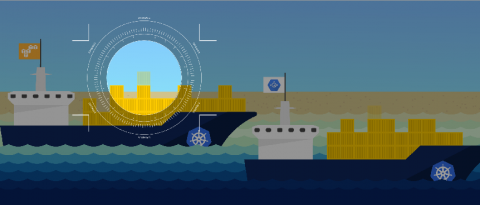
Container technologies have taken the infrastructure world by storm. Ideal for microservice architectures and environments that scale rapidly or have frequent releases, containers have seen a rapid increase in usage in recent years. But adopting Docker, containerd, or other container runtimes introduces significant complexity in terms of orchestration. That’s where Kubernetes comes into play.
As explained in Part 1 of this series, monitoring a Kubernetes environment requires a different approach than monitoring VM-based workloads or even unorchestrated containers. The good news is that Kubernetes is built around objects such as Deployments and DaemonSets, which provide long-lived abstractions on top of dynamic container workloads.