Mailchimp
Not subscribed to OpsMatters Newsletter


Datadog’s rapid growth illustrates a couple of key industry themes: First, growth in cloud applications continues at an unprecedented rate, and second, cloud applications require enterprises to rethink existing tools for visibility. Most significantly, the fact that Datadog has grown rapidly even as traditional monitoring companies have floundered, is a clear illustration of how companies built for a cloud era will disrupt those that were built for an on-premises era.
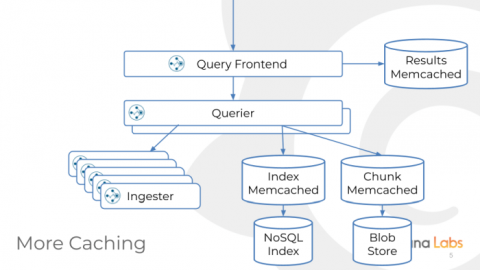
It all starts with Cortex – a horizontally scalable clustered version of Prometheus that was created three years ago and is now a CNCF Sandbox project. Cortex uses the PromQL engine and the same chunk format as Prometheus – literally the same code base.
Making award-winning stop-motion animated films is a complex, time-consuming process. To illustrate, LAIKA—an animation studio based in Hillsboro, Oregon—has released several feature-length films since its 2005 inception, including Coraline, The Boxtrolls, and Missing Link. During peak production periods, the company has more than 550 employees working out of its headquarters and also employs a team of contractors that is spread out across the world.
The increasing complexity of IT Infrastructure demands extensive network visibility and security. For those who have been working in networking for a while, NetFlow is not a new technology. Cisco created the network protocol “NetFlow” many years ago, which became the primary norm for collecting IP traffic information. NetFlow soon found its place within network management by providing valuable data of network performance and traffic analytics.
Now we are here, after many months of development – we proudly release Icinga 2.11 available today. It has been an emotional ride with many changes under the hood. The most obvious change is that Icinga’s distributed cluster operates more stable, the past quirks with hanging certificate signing requests or dead-locked TLS handshakes are now gone.
How is the incident response process set up at your organization? At PagerDuty, our approach is to holistically look at your infrastructure, your customer-facing applications, and your products. We distinguish these by describing these items as “services” that roll up to and make up a “business service.” This setup allows teams to better manage these services so that when incidents do happen, responders can gain context much faster. But how?
We recently sponsored our partner CloudBees’ conference DevOps World & JenkinsWorld in San Francisco and our message “Observe how Customers Experience Your Build” resonated well with the folks we met. Release engineers are critical to the continuous delivery cycle and knowing the right time to ship is important for internal business stakeholders but more importantly end-user customers and especially if it’s a significant release.