Operations | Monitoring | ITSM | DevOps | Cloud

Configure an Intuitive Service Dashboard & Reduce Response Time

Leverage Multiple Alert Sources in Squadcast to reflect your actual system infrastructure on your Service Dashboard Having your Incident Management Tool reflect your system architecture is a big milestone in reducing cognitive load on your on-call team. In order to help our users move one step closer to this milestone, we recently released the functionality to add multiple alert sources to a service. You can now model your service dashboard to mimic your actual system architecture.

Christian Fröhlingsdorf joins iLert as new Chief ...

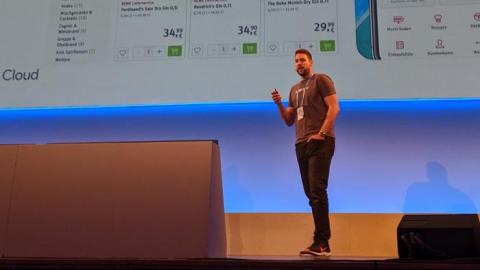
We are really excited to announce that Christian Fröhlingsdorf joins iLert as our Chief Technology Officer. Christian brings significant experience from senior roles in large industrial companies. He has held various positions within the REWE Group and played a key role in developing and growing a large microservice-based e-commerce marketplace for online grocery retail.

Glitch List: April 2020

Even though most of us have spent this month working from home or furloughed due to COVID-19, glitches certainly haven’t been taking a break. We’re still relying on intricate software systems to keep the world moving, and we have little ability to maintain them in person. What’s more, changing usage patterns have stressed global networks in ways that are hard to anticipate. As a result, we find ourselves in a perfect storm for technical outages.

Interplay of AIOps with ITSM Systems

ITSM systems and processes are similar to a front line defence system for Enterprises’ effort, in delivering superior customer satisfaction to its IT users. Enterprises are always looking for ways to resolve tickets as fast as possible and at an optimal cost. AIOps systems play a key role in automating data collection required for analysis , equipping support teams with insights to take immediate remediation action and eventually leading to automation of the complete process.

Black Swans and Grey Rhinos - Observations on Coronavirus and IT Ops During Crisis

As the Coronavirus crisis unfolds and all of us struggle to understand its implications and to adapt, many thoughts come to mind on many different levels – personal, business related, philosophical. This event is definitely a game changer, in the near future for sure – and many say in the long run as well.

5 ways you can Empower Your Remote IT Team

The coronavirus (COVID-19) pandemic has transformed the global workforce — and your enterprise is no exception. Enterprises are increasingly allowing staff to work remotely during this difficult time. Yet, many enterprises are still learning how to use remote workforce technology to effectively engage workers in real-time. AlertOps can connect your teams, regardless of location. It several features to power your remote workforce.

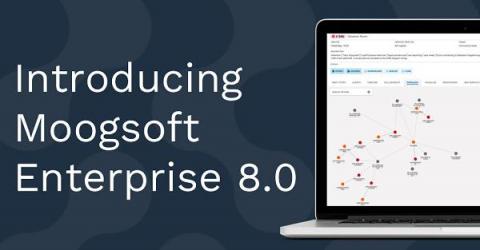
Moogsoft Enterprise 8.0 Redefines the Virtual NOC

Moogsoft Enterprise consolidates visibility and control of monitoring tools to help entire IT Ops and DevOps teams reduce noise, prioritize incidents, reduce escalations and ensure uptime. Working from anywhere, users can easily find and resolve the root cause of incidents before they become outages.

Moogsoft and PagerDuty: Boosting DevOps Teams' Productivity and Incident Resolution with AIOps

Today, the customer experience drives IT on all levels. In our digitally transformed world, we do everything online — transact, interact, purchase and more. This mandates constant change and zero downtime. Ironically, as enterprises adopt IT innovations, IT environments get harder to manage and impact the productivity and agility of DevOps and SRE teams — and as a result, the customer experience suffers.

Moogsoft and Atlassian JIRA and Opsgenie: Put the Dev and Ops in DevOps!

DevOps has become the go-to-approach for IT to accelerate their ability to achieve business requirements and ensure the quality of the customer experience. Today’s economy and the customer experience drives IT across the entire stack. Our world has become digitally dependent, which mandates an ever-evolving IT environment that’s on-demand and always available.