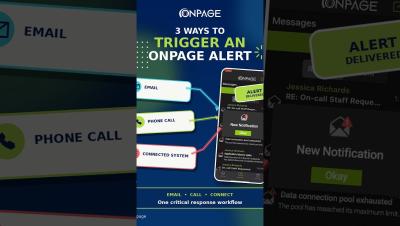
There’s a big difference between alerts generated by continuous IT monitoring and production systems and alerts that actually help people solve problems. We call those actionable alerts.
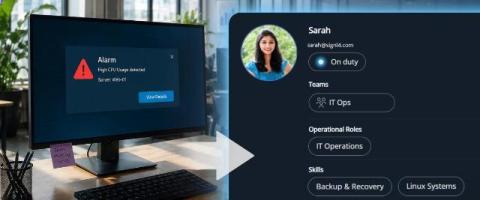
If you relied on AT&T Email-to-Text to notify people on the go or on call, SIGNL4 is an easy-to-use replacement. Alerting people stays simple with SIGNL4. It's easy to get started and goes beyond basic text messages by helping ensure someone responds.
Observability has a blind spot, and for most teams it sits at the network layer. You instrument your services, scrape metrics into Prometheus, ship logs somewhere searchable, and build dashboards that tell you when something is wrong inside your infrastructure. But the routing that carries traffic to and from that infrastructure often lives entirely outside the stack, watched through separate tools that do not talk to your alerting. This piece looks at why routing belongs in your observability pipeline and what it takes to get it there.
Plans change - and your on-call schedule should be able to change with them. With SIGNL4, you can quickly arrange shift coverage from your smartphone, so your team stays fully staffed while everyone knows exactly who's on duty. Whether it's a World Cup match, a family event, or any other last-minute plan, SIGNL4 helps you manage stand-ins and shift handovers without phone calls, spreadsheets, or confusion.
Many teams invest heavily in code quality, architecture and testing – yet still struggle with outages, slow response times, and unclear ownership. The reason is simple: software quality is about more than technology alone.
Why ops teams are giving their most urgent alerts a faster path than the inbox. Every operations team has been burned by the same thing at least once. Something breaks, an alert email goes out, and nobody sees it for forty minutes because it was sitting in an inbox behind a hundred other messages. For routine status noise, that delay does not matter. For a live incident, forty minutes is the difference between a quiet fix nobody notices and a very loud outage that ends up in a postmortem.
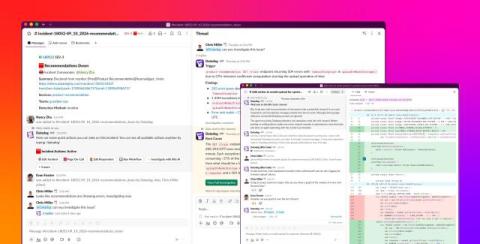
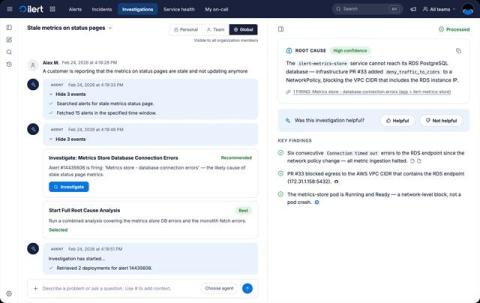
TL;DR: OrionIQ has launched the next generation of its Alert AI Analysis agent within the Open 360 AI platform, designed to automate and accelerate incident investigation. Key features of this evolution include: Agent-Based Investigation: Instead of relying on a single prompt, the system coordinates specialized AI agents to correlate data across diverse sources like logs, metrics, deployments, and tickets.
For years, ilert has given our customers extensive analytics across their alerts, notifications, and on-call activity, a comprehensive overview of how their teams and services respond to incidents. These capabilities were backed by a separate analytical database running on Google BigQuery. It held the numbers behind every reporting dashboard in ilert, and for a long stretch it was perfectly fine. Then three problems grew too big to ignore.
This quarter, we added more integrations to StatusHub, launched new platform features, and continued improving our Status API. Here’s what’s new for Q2 2026.
AT&T is permanently shutting down its email-to-text and text-to-email gateway, which means alerts sent to @txt.att.net or @mms.att.net no longer reach phones. For IT teams, MSPs, facilities teams, building management, utilities and incident response teams in general, this creates a serious gap. Critical alerts from monitoring tools, ITSM platforms, building systems, IoT devices, and other operational systems still need to reach the right person quickly, especially after hours.