The latest News and Information on Monitoring for Websites, Applications, APIs, Infrastructure, and other technologies.
Recently, one of my buddies moved to a new apartment. As an extreme binge-watcher, he tried all different combinations for positioning his 65-inch 4K TV and leather recliner in almost every single sq. ft of the living room. The only flexibility he did not have was in choosing an Internet Service Provider (ISP) for his new house. As a backend dev professional, it did not even matter to him as long as he was getting a 150Mbps internet connection.
Learning about the Icinga API can be an eye opening moment for some, and lead to a path of automation and configuration management. But where to start? Well, you can always check out the Icinga API documentation for that. But today, I have an idea for you – I’ll show you how to create a host through the Icinga 2 API.
We are pleased to announce the availability of the Elastic OpenTelemetry integration — available on Elastic Cloud, or when you download Elastic APM. This integration continues our to openness by embracing open standards support for the evolving OpenTelemetry standard for observability
While we know the many benefits of going serverless - reduced costs via pay-per-use pricing models, less operational burden/overhead, instant scalability, increased automation - the challenges are often not addressed as comprehensively. The understandable concerns over migrating can stop any architectural decisions and actions being made for fear of getting it wrong and not having the right resources.
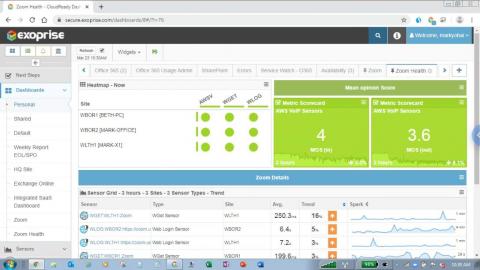
Enterprise monitoring tools have traditionally paid attention to the performance of monolithic applications hosted on physical and virtual infrastructure resources. The adoption of cloud native and microservices architectures has brought greater focus to end-user experiences delivered by web applications across different global locations. The bar for a great digital customer experience has never been higher.
This article was written by Gregory Scafarto, Data Scientist intern at Supralog, in collaboration with InfluxData’s DevRel Anais Dotis-Georgiou. At InfluxData, we pride ourselves on our awesome InfluxDB Community. We’re grateful for all of your contributions and feedback. Whether it’s Telegraf plugins, community templates, awesome InfluxDB projects, or Third Party Flux Packages, your contributions continue to both impress and humble us.
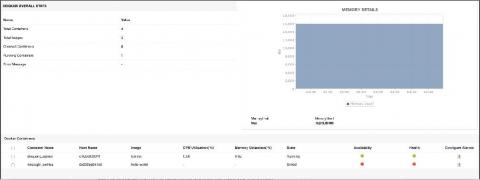
Docker is a platform that enables developers to run software in packaged environments called containers. These containers are operating system (OS)-level virtualized elements that share a common Linux server yet have their software, libraries, and configuration files bundled within them. These containers can communicate with each other and exchange information, making it easier to develop and host multiple applications through the CI/CD DevOps methodology.