Operations | Monitoring | ITSM | DevOps | Cloud

The latest News and Information on AIOps, alerting in complex systems and related technologies.

The Difference Between Keeping Up and Catching Up

It is common to find two organizations running the same platform, staffed by people of similar skill, operating under comparable budgets, and arriving at completely different relationships with the technology they depend on. For enterprise IT teams, this often shows up in how they manage platform releases, integrations, upgrades, and ongoing maintenance.

Inside the Gartner Market Guide for CSP Service and Network Assurance Solutions: Agentic AI and the Foundation It Runs On

Most CSP assurance roadmaps now carry an AI line item. Fewer have a clear answer for what that AI actually runs on. Over the past year, the working question across operators and vendors has narrowed to something practical: how to put agents to work in assurance while keeping operators in control.

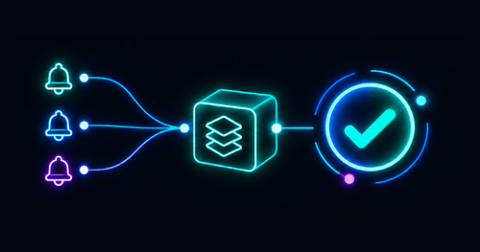
Automate Your Entire Incident Response with Skylar Automation

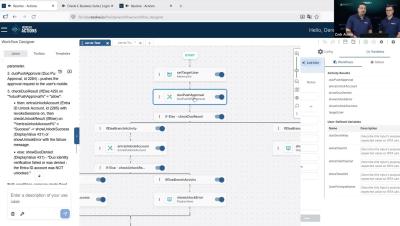
See how Skylar Automation transforms incident response by orchestrating workflows across the tools your teams already use. In this demo, watch Skylar Automation respond to a critical service degradation by automatically creating a ServiceNow incident, paging the on-call engineer in PagerDuty, notifying the Microsoft Teams operations channel, and keeping updates synchronized across platforms. With Skylar Automation, teams can.

Geographic Maps in Skylar One

Geographic Maps in Skylar One give IT teams a faster, more intuitive way to understand infrastructure and service health across distributed environments. In this walkthrough, Brian Harding, Director of Product Management at ScienceLogic, demonstrates how to create and configure a Geographic Map in Skylar One. See how to create locations, align devices and services, use filters to control what appears on a map, and visualize infrastructure health based on real-world locations.

Location Management in Skylar One

Location Management in Skylar One gives IT teams a centralized way to create, maintain, and organize location data, building the foundation for trusted geographic visibility across distributed environments. In this walkthrough, Brian Harding, Director of Product Management at ScienceLogic, demonstrates how to create and manage locations in Skylar One. See how teams can define locations, associate them with the right organizations, and use accurate latitude and longitude data to establish the geographic context needed for devices, services, and Geographic Maps.

AI Agents Need Guardrails: Building Autonomous IT with Resolve Agent Lab | Agents of IT

AI agents are moving fast. For enterprises, the bigger question is how to make them useful, trusted, and safe enough to take action. In this episode of Agents of IT, Zach Austin and Ian Coppock unpack what it takes to move from experimenting with AI to operationalizing agentic AI across the enterprise. They explore why organizations are racing to deploy AI before defining the problems they want to solve, why governance and scoped responsibilities are critical, and why the real value of AI comes from fixing and orchestrating the workflows underneath it.

Introducing the next generation of the BigPanda AI Incident Assistant

Effective incident response depends on having all of the context surrounding what’s happening. You have to understand your systems, services, architecture, and teams deeply enough to correctly interpret whatever alert just fired. Too often, that context doesn’t arrive packaged neatly in one place. Gathering and interpreting context correctly under time pressure is one of the most difficult parts of the job.

What data sources does agentic ITOps use

Agentic IT operations have arrived. It’s no longer a question of if enterprise IT departments will adopt agentic ITOps, but how quickly. The question we hear most often at BigPanda isn’t “what are agentic ITOps,” it’s “what data do we actually need to get started?” That’s the right question to ask. Agentic AI is only as good as the data and context that feeds it. Real-time observability and telemetry data from machines. Structured ITSM and workflow records.

The Most Important Improvements Are Often the Ones You Never See

When organizations evaluate software platforms, attention naturally gravitates toward visible outcomes. New capabilities, expanded functionality, improved user experiences, and innovative technologies often dominate conversations about platform value. These improvements are important because they directly influence how teams interact with technology and how organizations achieve business objectives.