Earlier this year, I had the chance to meet with one of our airline customers. During the meeting, we discussed how to use agentic technology to automate L1 workflows. As one of the largest global airlines, they have many applications and service teams focused on flight-critical, tier 1 environments. Any downtime can cause costly delays and unhappy customers.
New research from BigPanda reveals what enterprises spend on outsourced IT operations support, what they get in return, and why leaders are ready to rethink the model. Enterprises spend an average of $5.4 million a year on outsourced IT operations support. That’s a substantial investment. It should produce reliable frontline operations: incidents detected, understood, routed, and resolved with the speed and accuracy the business expects. The research shows a different picture.
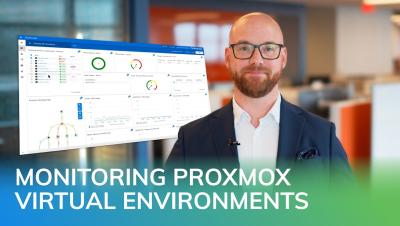
See how the ScienceLogic Proxmox Virtual Environment PowerPack brings centralized visibility and operational context for Proxmox infrastructure into Skylar One. In this demo, VP of Skylar AI Douglas James walks through how the PowerPack automatically discovers Proxmox clusters, nodes, QEMU virtual machines, LXC containers, and storage resources, while building topology relationships that help teams understand how their virtual infrastructure is connected.
Password resets are a perfect starting point for agentic automation. See how Resolve Agent Lab builds an AI agent that verifies users, resets credentials, and closes the loop automatically.
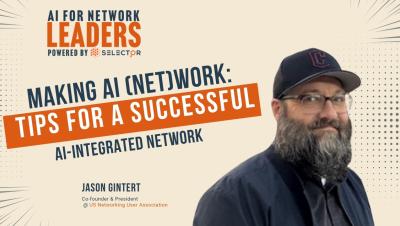
AI in network operations has moved past the demo. In some shops it's already cutting detection time and clearing the alert noise that used to bury the engineering team. In others, a promising rollout has quietly stalled the moment it met production. That difference between the two rarely comes down to the model, it comes down to how the AI gets integrated into the network and most importantly, the team around it.
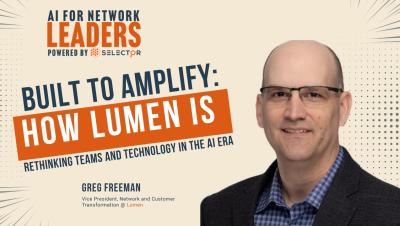
Last year, Lumen shared its AIOps roadmap. This year: two updates. First, how Lumen's thinking on AI-era org design has shifted — including why the instinct to cut junior headcount is a trap, and what sustainable team structures look like instead. Second, what Lumen built as a result: a single AI core (AskGreg) extended into a customer-facing email agent (NORA), a chatbot, and an in-progress voice agent — all leveraging the same modular platform. Live video demos show the system diagnosing network problems from alarm data and driving real-time network decisions. The closing thesis ties it together.
It is common to find two organizations running the same platform, staffed by people of similar skill, operating under comparable budgets, and arriving at completely different relationships with the technology they depend on. For enterprise IT teams, this often shows up in how they manage platform releases, integrations, upgrades, and ongoing maintenance.
Most CSP assurance roadmaps now carry an AI line item. Fewer have a clear answer for what that AI actually runs on. Over the past year, the working question across operators and vendors has narrowed to something practical: how to put agents to work in assurance while keeping operators in control.
Password resets are a perfect starting point for agentic automation. See how Resolve Agent Lab builds an AI agent that verifies users, resets credentials, and closes the loop automatically.