The latest News and Information on Containers, Kubernetes, Docker and related technologies.
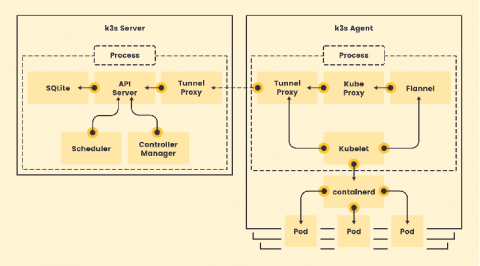
This blog post is an adaptation of a talk I gave at the Cloud Native meetup in Birmingham in the UK in February 2020. It details the advantages of k3s, a lightweight Kubernetes distribution we have deployed as part of a managed Kubernetes service. Developed by Rancher Labs, k3s allows for quick deployments for testing, CI/CD runs and getting to grips with Kubernetes without having to commit to large-scale infrastructure and the costs that would bring.
The source code for this post can be found on this github repo Ktor is a brand new micro-framework created by the Jetbrains team and running over the JVM. Jetbrains are the authors of Kotlin - the official language for Android, and Intellij - one of the popular IDE. I personally have +4 years of experience using Spring and I wanted to give a try to Ktor which seems promising. Creating a URL shortener is a good way to start.
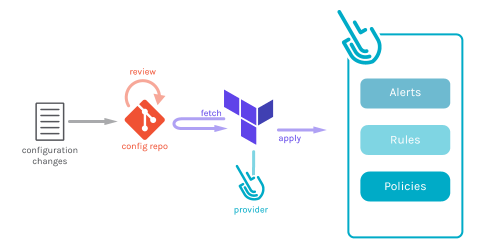
This article will show you how to leverage the Sysdig Terraform provider to follow Secure GitOps principles and use security as code in your infrastructure to define Alerts, Rules, and Policies.
AI and Machine Learning are becoming critical differentiators in the technology landscape. By their nature, AI and ML are computation hungry workloads. They require best-in-class distributed computing environments to thrive. AI and ML present a perfect use case for Kubernetes, the distributed computing platform engineered at Google to run their massive workloads.
Norwegian leader in fleet management, equipment and vehicle tracking, ABAX is one of Europe’s fastest-growing technology businesses. The company provides sophisticated fleet tracking, electronic mileage logs and equipment and vehicle control systems to more than 26,500 customers. ABAX manages over 250,000 active subscriptions that connect a variety of vehicles and industrial equipment subscriptions.
Container technologies have taken the infrastructure world by storm. Ideal for microservice architectures and environments that scale rapidly or have frequent releases, containers have seen a rapid increase in usage in recent years. But adopting Docker, containerd, or other container runtimes introduces significant complexity in terms of orchestration. That’s where Kubernetes comes into play.
As explained in Part 1 of this series, monitoring a Kubernetes environment requires a different approach than monitoring VM-based workloads or even unorchestrated containers. The good news is that Kubernetes is built around objects such as Deployments and DaemonSets, which provide long-lived abstractions on top of dynamic container workloads.
In the previous post in this series, we dug into the data you should track so you can properly monitor your Kubernetes cluster. Next, you will learn how you can start inspecting your Kubernetes metrics and logs using free, open source tools. In this post we’ll cover several ways of retrieving and viewing observability data from your Kubernetes cluster.