Operations | Monitoring | ITSM | DevOps | Cloud

The latest News and Information on Incident Management, On-Call, Incident Response and related technologies.

5 Reasons to Switch from PagerDuty to a More Effective Alternative

When it comes to Incident Management, having the right tool can make all the difference between a swift resolution and prolonged downtime. While PagerDuty has long been a staple in the industry, many teams are finding more effective alternatives that better align with their needs and offer significant advantages. Here, we explore five compelling reasons to consider switching from PagerDuty to more efficient alternatives.

Reducing Coordination Costs in Incident Response

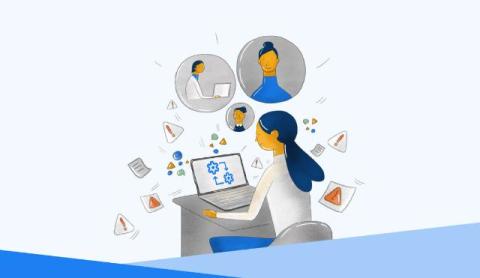
Incidents can happen anywhere at any time. They can be small, well-defined, and easily contained. They can be large, messy, and complex, like the major outage we saw recently. Or they can be somewhere in between. When incidents occur, mobilizing and coordinating responders is crucial to restoring service, protecting the customer experience, and mitigating business risks.

Redefining incident management: the power and pitfalls of AI

Like it or not, AI is having a monumental impact on our lives. Most of the products we engage with today have AI features and functionality, aimed at assisting or completely replacing the actions normally taken by humans. When it comes to incidents, we’re firm believers of accelerating human actions, and believe the risk of over-automation far outweighs the benefits. In this live event we’ll dig a little deeper on why, as we cover the power and pitfalls of AI.

The Best SRE Tools To Improve Reliability and Streamline Operations

For better or worse, most companies—including their execs and developers—see SREs as superheroes who’ll save them from the evils of downtime and service degradation with their boundless superpowers. SREs are expected to constantly perform dangerous stunts like production debugging or communicating highly technical issues to angry VPs. They must also be able to manage infrastructure, networks, databases, pipelines, operating systems and much more.

PagerDuty Advance | Generative AI for PagerDuty Operations Cloud

Introducing PagerDuty Advance: GenAI for critical operations work. For every step of the incident lifecycle. For scaling your teams. For sustaining customer experiences. For moving business forward – faster. Work more efficiently. Protect more revenue. Build greater operational resilience. PagerDuty Advance helps operations teams manage business-impacting issues in seconds, not hours. From event to resolution, PagerDuty Copilot’s automations help you resolve issues faster, reduce risk, and control costs.

Drive Operational Excellence featuring PagerDuty Advance

Build operational excellence with PagerDuty. Watch this demo to see how the latest innovations for the PagerDuty Operations Cloud come together to help a team tackle a major incident related to a database upgrade. You’ll see how PagerDuty Advance capabilities work in concert with new functionality built for modernizing operations centers, standardizing automation at scale, and transforming incident management. The result? Improved innovation velocity, reduced operating costs, and better customer experiences.

Microsoft Outage MO842351: Understanding Impact & Scope Saves You From Raising Unnecessary Alarm Bells

Just ten days after the last major Microsoft 365 outage, Microsoft reported another incident at 8:48 am on July 30, 2024. The message on X was vague, offering limited details about the scope and impact of the problem. This left many IT teams preparing for what they anticipated would be another rocky day.

Automated incident response in ITOps

Most IT leaders realize that automating repetitive, low-level incident response actions is vital to multiple benefits. To name just a few, these include: In IT, incident response refers to addressing any event that disrupts normal service, application, security operation, or performance. Using AI and machine learning, automation addresses incident analysis, detection, investigation, triage, and response. The question is often identifying where to start or the best approach.