Operations | Monitoring | ITSM | DevOps | Cloud

The latest News and Information on Incident Management, On-Call, Incident Response and related technologies.

PagerDuty Advance | Generative AI for PagerDuty Operations Cloud

Introducing PagerDuty Advance: GenAI for critical operations work. For every step of the incident lifecycle. For scaling your teams. For sustaining customer experiences. For moving business forward – faster. Work more efficiently. Protect more revenue. Build greater operational resilience. PagerDuty Advance helps operations teams manage business-impacting issues in seconds, not hours. From event to resolution, PagerDuty Copilot’s automations help you resolve issues faster, reduce risk, and control costs.

Drive Operational Excellence featuring PagerDuty Advance

Build operational excellence with PagerDuty. Watch this demo to see how the latest innovations for the PagerDuty Operations Cloud come together to help a team tackle a major incident related to a database upgrade. You’ll see how PagerDuty Advance capabilities work in concert with new functionality built for modernizing operations centers, standardizing automation at scale, and transforming incident management. The result? Improved innovation velocity, reduced operating costs, and better customer experiences.

Optimizing Incident Management: Effective Stakeholder Communication with Squadcast

When a critical system goes down, every minute counts. Amid the chaos, it's easy to overlook a crucial aspect of Incident Management: keeping stakeholders informed. However, neglecting stakeholder communication can have disastrous consequences, including misinformation, delayed decisions, and frustration. Effective stakeholder communication is essential for ensuring a coordinated, efficient, and transparent response to incidents.

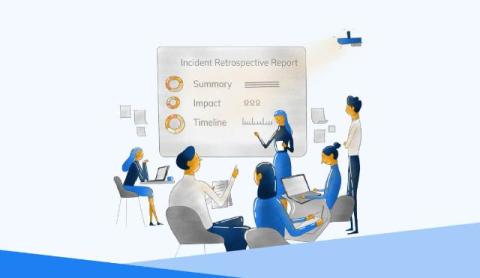
Where does the time go after you resolve an incident?

We were curious: once an incident is over, how long does it take companies to document, review, create learnings, finish clean-up items, and complete any other follow-up action items? We work with a wide variety of companies, from small start-ups to Enterprises with thousands of engineers. But we wanted to know: where is their time spent after they resolve an incident? Here’s what we found!

25 Best Incident Management Software and Communication Platforms 2024

In 2024, only 45% of companies have an incident response plan in place. If your organization is among the 55% without one, it’s crucial to change that. Service outages are inevitable. Cyberattacks and information security threats are more prevalent than ever. So having the right incident management software can be a game-changer for your organization, helping you respond swiftly and effectively when issues arise. The challenge, however, lies in selecting the right incident management solution.

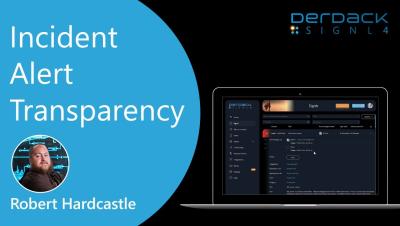
Enhancing Transparency in Incident Management with SIGNL4

Effective incident management is crucial for businesses to maintain smooth operations and customer satisfaction. However, ensuring transparency throughout the incident resolution process can be challenging. This is where SIGNL4 steps in, offering a comprehensive solution that enhances transparency at every step of incident handling.
Featured Post

Incidents are lessons, not failures

Delivering digital operations excellence - DevOps, incident management, and keeping organisations running - is a constant challenge. As customer digital expectations rise, so do the complexities of the tech stack and cloud services integrations. But to insist on 100% uptime and rush through incident management without taking learnings into account creates a poor culture that can damage the ability of the DevOps team. This is not how a business creates resilient infrastructure and high-performing teams.

How our data team handles incidents

Historically, data teams have not been closely involved in the incident management process (at least, not in the traditional “get woken up at 2AM by a SEV0” sense). But with a growing involvement of data (and therefore data teams) in core business processes, decision making, and user-facing products, data-related incidents are increasingly common, and more important than ever.

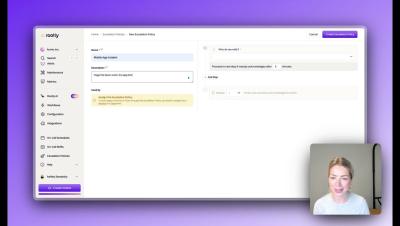
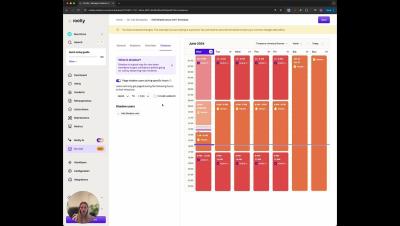
Rootly On-Call: On-Call Shadowing Feature

Shadowing experienced responders is one of the most effective ways for folks who are new to on-call to gain the confidence and knowledge to handle incidents independently. Traditionally, shadow rotations are cumbersome to set up, involving duplicating and editing an existing schedule. For Rootly On-Call users, setting up shadow rotations couldn’t be easier with our new native Shadowing feature. Here are a few highlights.