Introducing Title Remapper
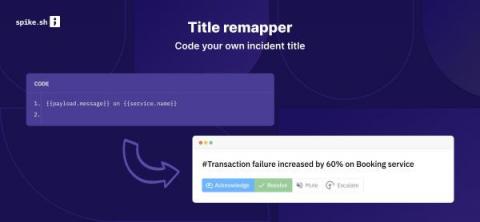
Over the last few months, a number of our users have asked if we can add more context to their alerts. We spoke with them on our live chat on dashboard and brainstormed the idea of Title Remapper.


The latest News and Information on Incident Management, On-Call, Incident Response and related technologies.
Over the last few months, a number of our users have asked if we can add more context to their alerts. We spoke with them on our live chat on dashboard and brainstormed the idea of Title Remapper.
At incident.io, we’re continually building out our integrations to work with all the tools you already know and love. Next on the list, is our first bug tracker, Sentry. Try posting a Sentry link on your next incident to check it out.
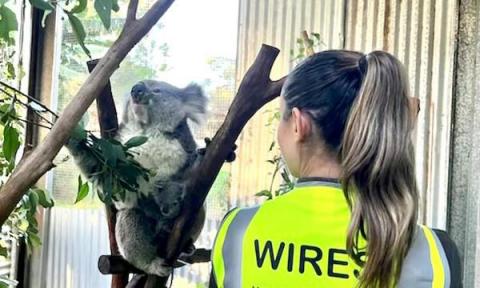
Everbridge’s xMatters Digital Service Availability Platform is Improving Animal Rescue Response Times through WIRES in Australia.
A few weeks ago we had a major incident. We were releasing our Practical Guide to Incident Management, and after posting about it online an incident.io employee noticed that the page wasn’t loading. Just to set the scene, I’ve been at incident.io for 3 months and don’t have any experience of incidents in my previous role. When the team got paged I expected this to be one of those “follow along and learn how the wizards work their magic” exercises.
On-call schedules ensure that there's someone available day and night to fix or escalate any issues that arise. Using an on-call schedule helps keep things running smoothly. These on-call workers can be anyone from nurses and doctors required to respond to emergencies to IT and software engineering staff who need to fix service outages or significant bugs. Being on-call can be challenging and stressful. But with the proper practices in place, on-call schedules can fit well into an employee's work-life balance while still meeting the organization's needs.
There are a handful of providers that large parts of the internet rely on: Google, AWS, Fastly, Cloudflare. While these providers can boast five or even six nines of availability, they’re not perfect and - like everyone - they occasionally go down.
Ask most SREs how many incidents they’d have to respond to in a perfect world, and their answer would probably be “zero.” After all, making software and infrastructure so reliable that incidents never occur is the dream that SREs are theoretically chasing. Reducing actual incidents by as much as possible is a noble goal. However, it’s important to recognize that incidents aren’t an SRE’s number one enemy.
The past few years have led to fundamental business and cultural shifts for both companies and employees. Covid-19 has brought opportunities for companies who invested early in digital operations, while others struggled to maintain the status quo. The latter gave rise to record employee burnout, and what is now commonly referred to as the Great Resignation.