Operations | Monitoring | ITSM | DevOps | Cloud

What IT Pros Can Learn from the Marriott Data Breach

Despite the best efforts of individuals to protect their own data, they cannot always account for the cybersecurity shortcomings of larger organizations such as their employers, financial institutions, and healthcare providers entrusted with their personal information. Hotels should also be added to this list of vulnerable entities, as was made painfully apparent in the most recent Marriott data breach.

How MSPs Can Provide Irreplaceable Value in Uncertain Times

If you have been following the financial news lately, you have surely become all too familiar with the challenging economic conditions that have emerged in 2022. As rising inflationary concerns put pressure on the bottom line, decision makers within businesses of all sizes are suddenly having to re-evaluate strategies, forecasts, and expenses. This pivot to a more conservative outlook is not unlike the approach adopted by businesses at the onset of COVID-19.

What You Need to Know in This Year's Upskilling IT Global Report

As a gold sponsor for DevOps Institute’s fourth annual Upskilling IT report, we compiled some key takeaways. However, there is so much more to get from this report – so download and read the full report today. In this technology-driven world, skills have a very limited shelf life. The knowledge, tools and resources we rely on in the moment rarely stay relevant or useful forever – especially with rapidly changing demands.

Top 7 Java Performance Metrics to Monitor

Today, almost any metric you can think of can be tracked down and reported, as opposed to the past when the software was traditionally provided in boxes and its performance in production could not be predicted. The issues we are currently facing are not due to a lack of information, but rather to an abundance and scale of information. This becomes significantly more difficult to manage when dozens or even hundreds of servers are in use.

Three Critical Questions for Healthcare

Before the pandemic, healthcare was already experiencing staffing shortages. The patient population was getting older and needing more care. Many healthcare professionals were also heading towards retirement. Unhealthy lifestyles were spreading, and the level of education required to enter healthcare professions was rising. Demand exceeded supply.

Configuring a pipeline using multiple CircleCI orbs

Continuous integration/continuous delivery (CI/CD) tools give developers the ability to automate the software development process. As soon as developers push code to git, your CI/CD system can build, test, stage, integration test, deploy, and scale. That’s fantastic! In this tutorial, we will look at CircleCI orbs and how they can support your CI/CD practice. We’ll look at how to use multiple orbs and how orbs can help with multi-builds for a variety of application types.

Five Reasons Digital Employee Experience Management (DEX) Is Essential to Your Business

Business objectives for IT management have fundamentally shifted. Traditionally, organizations imposed a heavy-hand over the types of IT resources their workers employ and how they will use them. However, over the past decade or so, a growing awareness has supplanted these antiquated approaches suggesting technology should conform to the needs of the workers, rather than the other way around.

Lessons learned while scaling Collapsed Reply Threads

When the first supporting server-side infrastructure for Collapsed Reply Threads (CRT) shipped with Mattermost v5.29 (November 2020), it included an ominous release note: > This setting is enabled by default and may affect server performance. While performance concerns are possible with any new feature, most features don’t require significant architecture and data model changes. Most features don’t ship incrementally across 20 monthly releases. And most features – to their credit?

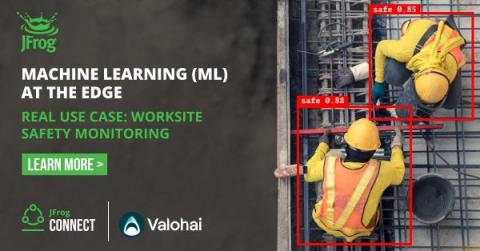
Continuous Training and Deployment for Machine Learning (ML) at the Edge

Running machine learning (ML) inference in Edge devices close to where the data is generated offers several important advantages over running inference remotely in the cloud. These include real-time processing, lower cost, the ability to work without connectivity and with increased privacy.