The latest News and Information on Monitoring for Websites, Applications, APIs, Infrastructure, and other technologies.
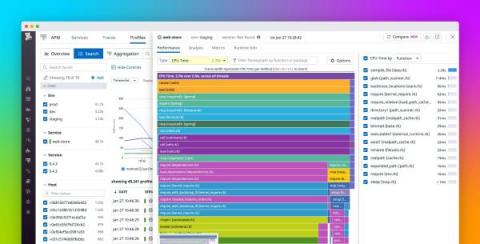
Ruby is an object-oriented programming language celebrated for its simple and easy-to-read syntax. It powers Ruby on Rails, the open source web development framework that streamlines common development tasks involved in building web applications. We’re pleased to announce that our Continuous Profiler, which provides low-overhead, code-level performance insights, is now generally available for Ruby applications.
Most companies take their integration infrastructure for granted. I'm talking about middleware such as IBM MQ, Kafka, Solace, ActiveMQ, RabbitMQ. These form the basis of most enterprise-level businesses. One of our electronic manufacturing customers was building products worth $40K per minute. A failure in one of the factory floor's automated systems brought manufacturing operations to a complete halt.
Understanding the needs of your network is vital to keep your network up and running. In the wake of the remote work era, it’s important to monitor and plan your bandwidth utilization. Recent surveys have reported a 45% increase in VoIP and video traffic as the need for telecommuting has doubled since the pandemic. Business Wire, a broadband provider, also reported a 30% spike in data traffic and a 50% rise in voice traffic since mid-March.
Virtualization is the technique of creating a software-based virtual version of something, whether that be computers, storage, networking, servers, or applications. Virtualization creates a virtual layer over the hardware, enabling the creation of virtual machines (VMs), which are virtual computers that you can run multiple of on a single piece of hardware.
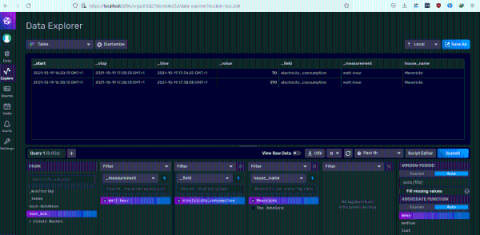
You just launched your application and it’s attracted more users than you were expecting. Your web server is bombarded with data. Now you need to know more about your users: what is the dominant device they’re using, and how long are they staying on the app? A time series database will help you answer these questions. It allows you to save data for a given point over a specified period of time, which gives you insight into what type of usage you’re getting and when.
To date, AIOps has been a solution first and foremost for IT operations teams. In other words, AIOps has been used primarily to help IT teams manage what happens in the post-deployment part of a CI/CD pipeline, when they need to detect and remediate issues in production environments. That doesn’t mean, however, that AIOps leaves developers out of the picture. Although the conversation surrounding AIOps hasn’t paid a lot of heed to developers so far, it’s perhaps time to change that.
Ever wonder how your teammates go about debugging? When you use Honeycomb, you’re not only getting observability into your systems; it also provides observability into how your teammates use Honeycomb! Very meta, no? You’re never alone when writing or running Honeycomb queries. Opening up the right sidebar will show you the queries your teammates have recently run on the same dataset.
It’s soon two years since I’ve introduced you to Icinga L10n. There I’ve talked about a place on-line to ease collaboration. So, without further ado, let me introduce you to translate.icinga.com! We’re using Weblate on there and hope that interested users may already be familiar with it. The basic tools are easy to grasp though. And even if not, it has an extensive user documentation.