Nastel Reports Significant Growth In Integration Infrastructure Management
Nastel Technologies, the leading solution provider of Integration Infrastructure Management (i2M), announced another great growth year today.


The latest News and Information on Monitoring for Websites, Applications, APIs, Infrastructure, and other technologies.
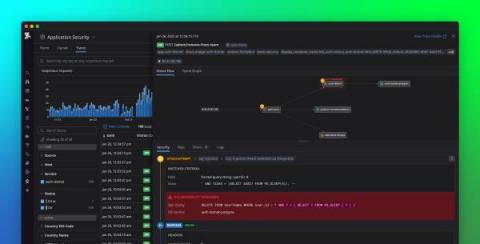
Securing modern-day production systems is expensive and complex. Teams often need to implement extensive measures, such as secure coding practices, security testing, periodic vulnerability scans and penetration tests, and protections at the network edge. Even when organizations have the resources to deploy these solutions, they still struggle to keep pace with software teams, especially as they accelerate their release cycles and migrate to distributed systems and microservices.
When downtime strikes any distributed software deployment or platform, it's all hands on deck until the lights are green and service is restored. This process, from the recognition of a problem to a deployed solution, has most commonly been defined as MTTR - mean time to resolution. In just the last few years, DevOps and site reliability (SRE) professionals have developed sophisticated new models for how they work and audit their successes. In 2022, MTTR is one of the most widely-used software performance success metrics.
Everyone is doing it. No, I am not talking about the latest Tik Tok challenge… The thing that everybody is doing—every company, that is—is that they are spending more money in the cloud than they need to. In fact, 82% of respondents in our own recent survey admitted that their organizations have incurred unnecessary cloud costs.
I bet we all have heard so much about eBPF in recent years. Data shows that eBPF is quickly becoming the first choice for implementing tracing and security applications, and Elastic is also working relentlessly on supercharging our security solutions (and more) with eBPF. However, one major challenge is that the eBPF ecosystem lacks tooling to make developers' lives easier. eBPF programs are written in C but compiled for a specific ISA later executed by the eBPF Virtual Machine.
Yes! While data is data (and tools exist on a continuum, and can and often are reused or repurposed to answer questions outside their natural domain), observability and BI/data warehouses typically exist on opposite ends of the spectrum in terms of time, speed, and accuracy, among others.
Whether you are a DIY ace or a master at roast beef, a decorated luthier or the best seamstress in the neighborhood, we all love to work with good tools, right? This includes, of course, good IT professionals. Because IT monitoring tools are fundamental when it comes to supervising a network infrastructure and applying the corresponding policies and security measures. Even so, not every monitoring tool is perfect, in fact some could even get to the point of harming us. Let’s take a look!
If I had a penny for each time someone asked for a single pane of glass view across my 20 years in the application monitoring (now observability) space, and I would be retired instead of writing this blog. But, on the other hand, I’d be in big trouble if I paid out each time we failed we finished that ask.