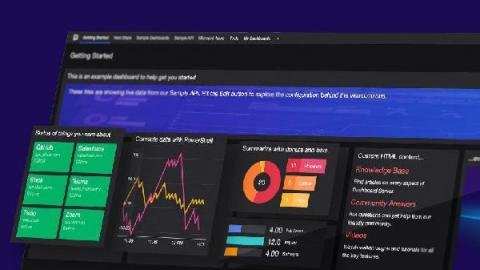
Last year at .conf19, we announced the GA release of Splunk TV, our free app for Apple TV that provides users with a secure, reliable, read-only platform to display Splunk dashboards on their TVs. Splunk TV was built with security in mind, to power your SOCs and NOCs. Using Splunk TV instead of running dedicated computers to power each screen saves money and increases security. The read-only experience eliminates the risk of someone with physical access tampering with your environment.
If you’re reading this, you have probably been convinced that taking on Kotlin for your mobile application is the most sensible choice. Now that you’ve come to this decision, it’s imperative to know what you need to do to stay on top of your monitoring and logging. Like with any application or system, they are essential, cornerstone qualities of any successful project.
When we look at information, numbers, percentages, statistics, we tend to have an easier time understanding and interpreting them if they’re also represented by corresponding visual cues. Kibana Canvas is a tool that helps us present our Elasticsearch data with infographic-like dashboards – fully visual, dynamic, and live.
According to a recent report by IBM, the damage caused by major IT incidents is greater than ever. An incident that results from a data breach will cost the organization an average of $3.86 million, with the average time to breach containment coming in at 280 days! And according to the ITIC, hourly downtime costs come in at over $300,000, with some at even $1 million per hour.
Kubernetes is an open-source platform that is used for automating computer application configuration, scaling, and deployment. In order to understand the importance of Kubernetes, let us take a step back and understand why this platform was introduced in the first place.
Five worthy reads is a regular column on five noteworthy items we’ve discovered while researching trending and timeless topics. In this edition, we’ll learn about hyperscale data centers, including how they function, and the considerations and challenges organization face in deploying them.
With AWS’s announcement that macOS instances are available on Amazon EC2, iOS, macOS, and Safari developers now have the opportunity to move their build and test pipelines to the cloud and take advantage of all that the AWS ecosystem has to offer.