Mailchimp
Not subscribed to OpsMatters Newsletter


Everyone is shifting their workloads to the cloud, but one challenge remains: Workloads need to be automated. Whether they’re employing a cloud-native, cloud server, or hybrid model—IT operations teams need to know what, when, and now also where to automate. Speaking at the recent 2022 Automation Virtual Summit, Dave Kellermanns, Global Advisor for Automation, Broadcom Software explored some lessons learned and best practices for cloud automation. Read on to see some of the highlights.
In dynamic production environments, unpredictable traffic loads and frequent code changes can make it difficult for organizations to consistently optimize their cloud infrastructure, resulting in application performance issues, latency, and wasted cloud spend. Teams that manage large-scale cloud infrastructure deployments are often forced to tune their workloads’ configurations using a complicated mesh of script jobs—or worse, manual remediation by on-call engineers prompted by alerts.
The quality of customer experience (CX) is declining, according to the American Customer Satisfaction Index. Customer satisfaction is at its lowest point in 17 years: 73.2 out of 100. Many factors are at play here, but there’s clearly an opportunity to improve the experience your customers receive. Adopting new strategies and technologies, such as AI in the contact center, can significantly improve efficiency and competitive advantage in three key ways.
This panel is in alpha version and still in development. To use it as is, you need to modify your configuration file and set enable_alpha = true in the panels section. More information can be found on this page. Two-dimensional graphics are the de facto way to visualize data within the observability realm, and Grafana is really good at plotting data this way.
In the age of Big Data and analytics, companies are increasingly using the power of numbers and data to improve their processes. In the incident management world, this means turning to KPIs, metrics, and other incident monitoring methods to recognize trends and take corrective action. To manage and improve your incident management processes, you have to keep an eye on KPIs and metrics.
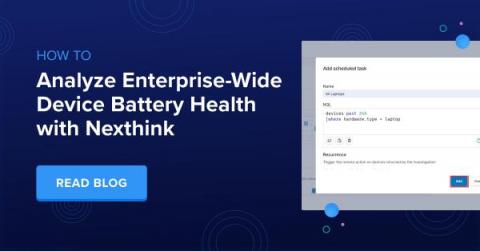
Hardware is one of the most important, and most expensive, line items in IT’s purview. Constantly refreshing and provisioning hardware takes time and can be a very manual process. And one of the most significant reasons for refreshing hardware is battery life. Monitoring the health status of device batteries is crucial, and determining the health status can help maintain and extend the device lifetime in any environment.