Mailchimp
Not subscribed to OpsMatters Newsletter


Bigeye is the data observability platform that teams at companies like Zoom and Instacart use to keep their data pipeline fresh, high quality, and reliable. Their customers depend on them to detect problems in their data pipelines 24/7 and to keep data reliable enough for production use cases of analytics and machine learning. In this environment, margins for error are razor thin and waiting for a user to let you know that something isn’t working means it’s already too late.
When it comes to your analytics tools, would you say they’re getting easier to manage overall, or is it increasingly difficult? Can you easily scale to meet new compliance requirements, or is there so much custom work required that the pace of change is too much for your team to handle? Do you feel in control over how and where your observability data flows, or do you feel beholden to your vendors? This blog post will shed light on how you can ease the strain on your downstream systems.
At ServiceNow, we’re continually innovating to help make work better for everyone. I’m excited to announce the launch of three new Now Platform® solutions to help enterprises advance their digital transformation efforts. These solutions include new features to unlock productivity, low-code governance, and innovation for the new world of work.
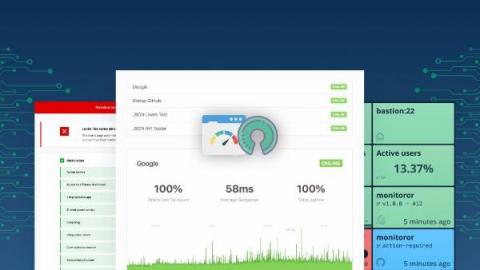
With so much reliance on online services and applications these days, a status page is essential to a business, its support and IT teams. It’s a key component in your incident communication strategy. Communicating the status of your website or service to users (particularly customers) creates trust and keeps them updated—especially during downtimes. Plus, it saves you from sending out emails or using other time-consuming methods to provide status updates.
Hot on the heels of our Ubuntu 22.04 LTS release, we’ve already started building our first images for Ubuntu 22.10, codename: Kinetic Kudu. Up until now, Ubuntu WSL users have had access to our current Long Term Supported (LTS) releases. These provide a stable Ubuntu development environment, deeply integrated with Windows, for data science, cloud, web and IoT developers. But what if you’re one of those folks who like to live life on the edge?
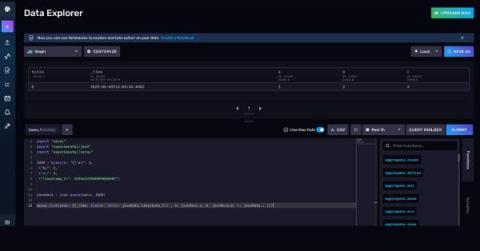
There are multiple ways to use Flux to bring in data from a variety of different sources including SQL databases, other InfluxDB Cloud Accounts, Annotated CSV from a URL, and JSON. However, previously you could only manually construct tables from a JSON object with Flux as described in this first example. We’ll describe how to work with three examples with increasingly complex JSON types. First we will describe how to work with these JSON types with metasyntactic examples.
Our own CEO, Dave Link, sat down with the Senior Vice President of the EMEA region, Clive Spanswick, for an interview to discuss ScienceLogic’s rapid growth in EMEA. Here’s an excerpt of their conversation.
As Teams Phone becomes the norm in the Enterprise space, managing the quality of service delivery and user satisfaction, whether it’s cloud or connected to the PSTN, is mission critical. Teams PSTN calls are used for just about every type of meeting as well as for Contact Centers, Customer service, town halls and client pitches. Because of this ubiquitous usage, Enterprise IT needs analytics to understand how this service is performing for users and when problems are occurring.