Operations | Monitoring | ITSM | DevOps | Cloud

Latest posts

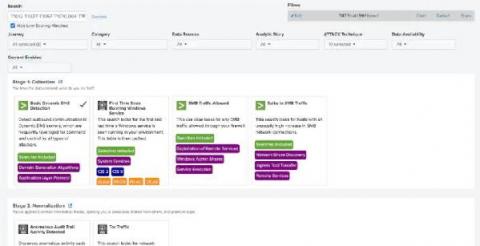
Get Started with Splunk for Security: Splunk Security Essentials

Continuing to ride the waves of Summer of Security and the launch of Splunk Security Cloud, Splunk Security Essentials is now part of the Splunk security portfolio and fully supported with an active Splunk Cloud or Splunk Enterprise license. No matter how you choose to deploy Splunk, you can apply prescriptive guidance and deploy pre-built detections from Splunk Security Essentials to Splunk Enterprise, Splunk Cloud Platform, Splunk SIEM and Splunk SOAR solutions.

Analyzing Office 365 GCC Data With Sumo Logic

Many of our customers today leverage Office 365 GCC High, including organizations looking to meet evolving requirements for working with the United States Department of Defense. Sumo Logic enables customers to leverage our out-of-the-box monitoring and analytics capabilities to analyze Office 365 GCC High data to offer security engineers and security analysts stronger situational awareness of internal employee data.

Top 5 Web Application Monitoring Tools You Should Know

Web application monitoring tools can keep your business afloat. Period.  Imagine this. You’re about to run a crucial end-of-season sale on your website. You’ve sent your emails, run social media campaigns, paid for advertisements, and stocked up your inventory; you are all set to let the cash register ring.  However, on D-day, your website goes down. It’s unable to handle the incoming traffic or is simply down because of technical glitches.

A Step By Step Guide to Tomcat Performance Monitoring

Application server monitoring metrics and runtime characteristics are essential for the applications running on each server. Additionally, monitoring prevents or resolves potential issues in a timely manner. As far as Java applications go, Apache Tomcat is one of the most commonly used servers. Tomcat performance monitoring can be done with JMX beans or a monitoring tool such as MoSKito or JavaMelody.

Honeycomb: Hot Swapping Active Production Services Reliably With Honeycomb

You've heard the analogy: changing a tire while the car is moving. And you've probably seen video of the acrobatic stunt driving necessary to make that kind of operation possible. Hot swapping production services reliably might seem like high-performance engineering stunt acrobatics but, in practice, anyone can do it safely and reliably with Honeycomb.

Elastic: Put your data to work with Elastic

Given exponential data growth and despite a proliferation of new tools to help organizations solve for a growing problem with data - content is becoming more difficult to find, enterprise IT is becoming more complex, and cyber threats are becoming more sophisticated. Join this webinar to learn how the world's leading organizations are putting their data to work using the power of search. Why search? Because search is the most intuitive way to find answers and to solve problems.
Featured Post

The New Normal for Hybrid IT Solutions

The more things change, the more things stay the same. An idiom that's oddly comforting in its assurance that everything will remain balanced and undisrupted, and the winds of change-however ferocious-are somehow futile against the staunchness of the status quo. That said, I would suggest the creator of this idiom hadn't experienced a year like 2020 (and now 2021).

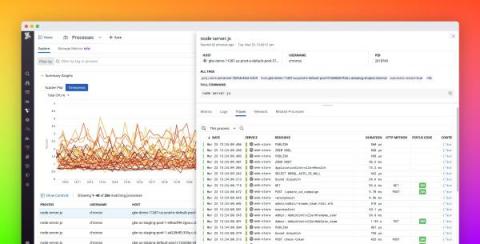
Troubleshoot faster with process-level app and network data

When responding to an incident, you need to quickly find the scope of the issue so you know which teams to notify and which parts of your system to investigate next—before your end users are affected. But as multiple processes use resources on each of your hosts, and interact in unexpected ways, it can be difficult to know exactly what is causing an issue—especially if those processes are running off-the-shelf software.


PD Summit21: Transforming Infrastructure Teams Through Observability

What is this ""observability"" thing that everyone is talking about? Observability allows you to navigate the dark unknowns with echolocation while others attempt to fly blindly without it. Are your dashboards all green, but you still have an issue brewing? Do you need instant feedback based on the Core Analysis loop? Are your engineers tired of waking up at 3 AM for the expected issues? Is there a lack of time for experimentation? Generate your own answers and create a meaningful course of action with observability.