Mailchimp
Not subscribed to OpsMatters Newsletter


The principles of network security didn’t change overnight, but our abrupt transition to a remote workforce dismantled traditional concepts of how we secure our network. Offices were designed for people to access their resources on-site or through a few well-defined locations; security took the form of inline firewalls, web gateways, and VPNs that were routed through a datacenter or other resource hub.
It has been eight years since The Phoenix Project was published and a lot has changed since then! I started to think about what we’ve learned in that time. It starts with the theory of constraints. I still see it all the time. Organizations take actions which are merely temporary, putting out fires but not solving for the underlying causes of those fires.
Hybrid IT is here to stay. As companies are moving to the cloud faster than ever, fueled by necessity during the pandemic, enterprise IT organizations must determine how to shift operations accordingly. Managing highly-distributed, multi-cloud IT environments is the new norm.
The pandemic has accelerated innovation as more companies scramble to be future-ready, flexible, and adaptable. Having quickly responded to a crisis and executed a planned digital transformation at UK telecommunications giant BT, I want to share lessons we learned to help other companies transition smoothly to a more digital future. Customers at the core The telecom industry has been changing rapidly over the past few years. The lines between work and play are becoming increasingly blurred.
Android is arguably the most ubiquitous operating system in the world. Whether it’s a tablet, phone, folding phone, computer, TV, or IoT device, chances are you’ve interacted with Android OS. And to help developers get full visibility into how their customers experience Android’s myriad applications, we’re extending Performance to Android.
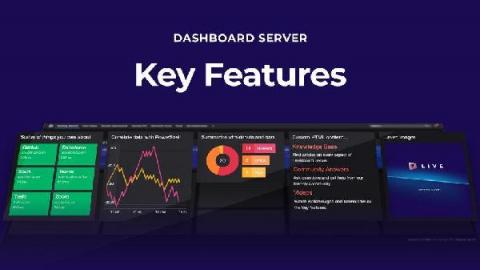
We recently launched the public preview of a new tool that lets anyone dashboard anything – for free. Meet Dashboard Server! You can download it free because we wanted to get our incredible dashboards in the hands of more people. The SCOM community know us well but our dashboards are perfect for so many use cases beyond System Center monitoring. And if you love them as much as we think you will, all we ask in return is that you share that love by spreading the word.
In a previous post I explained how to send metrics to Logz.io Infrastructure monitoring with Prometheus—now let’s analyze them by building Prometheus dashboards and visualizations in our metrics UI! Once you’ve started to send metric data to Logz.io, how do you visualize and interpret that data so that it’s useful for you? Logz.io Infrastructure Monitoring provides powerful querying and visualization of your data.