Mailchimp
Not subscribed to OpsMatters Newsletter


If you run a sizable enterprise, your network is probably sprawling. You also probably have a network management or IT security team on the payroll to handle monitoring. Their job is to check the network for potential security intrusions, make sure resources aren’t overloaded in one area, and otherwise ensure that things run smoothly.
Elastic on Amazon Web Services (AWS) gives you the power of Elastic Enterprise Search, Elastic Observability, Elastic Security as well as the Elastic Stack. You can quickly and easily search your environment for information, analyze data to observe insights, and protect your technology investment. Elastic Cloud lets you deploy your way, whether as a managed service or with orchestration tools you manage in the cloud.
This is part four of the “Well-Architected Serverless” series. In this post, we’ll talk about the Cost Optimization (COST) pillar of the Well-Architected Framework (WAF). Part 1: Security Part 2: Operational Excellence Part 3: Reliability The COST pillar concerns itself with the money you spend on your cloud infrastructure. It’s important to think about your system’s cost because, in reality, the perfect system won’t be used simply because it’s too expensive.
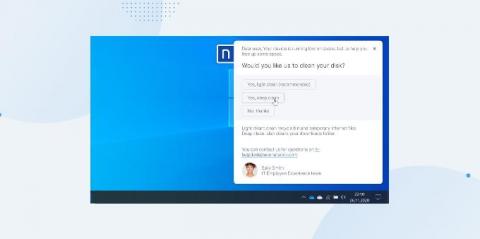
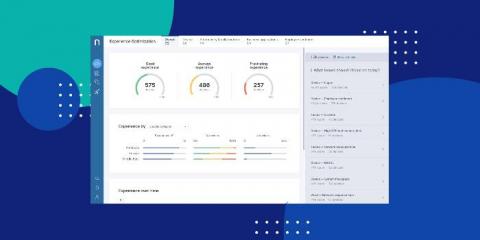
Nexthink Experience 2020.5, the latest product release, introduced a wide range of exciting new features for our customers—from additional Nexthink Act capabilities to Experience Optimization UX improvement. You can find out more on our product documentation page. But one feature we’re thrilled about and just can’t wait for our customers to discover is the new Nexthink Engage User Interface.
Since its initial release back in early 2020, Experience Optimization has offered IT teams around the world with a prioritized guided process for proactively managing digital employee experience (DEX) across the enterprise. Since then, it has received continuous upgrades with each product release – new DEX Score dashboards, a modernized interface, additional playbooks, updated metrics or remote working categorization to name a few.
OpenStack, the cloud computing platform, has proved to be a beacon of success for open source. It rounds off 10 years in existence this year, a period which has seen it reach nearly 200 countries, and we want to look ahead to what the future holds for the technology.
If you’re reading this post, you may have decided to containerize your applications. That’s great! The next step is to decide which container orchestration platform is best for you: Kubernetes or Docker Swarm. In this post, you’ll learn the key differences between Kubernetes and Docker Swarm, as well as the pros and cons of both approaches.
Digital transformation has accelerated in 2020, and the speed in which organizations are able to leverage technology to make work better for their employees and customers has become the ultimate differentiator in business. Microsoft and ServiceNow understand this, and have expanded our partnership to deliver new native workflows in Microsoft Teams.
We are excited to announce that Splunk Infrastructure Monitoring has achieved Outposts Ready designation. This designation recognizes that Splunk provides proven solutions for customers to build, manage and run hybrid cloud applications. AWS Outposts Ready designation establishes Splunk as an AWS Partner Network (APN) member that provides validated integrations with a specific focus on observability and monitoring of AWS Outposts deployments.