Mailchimp
Not subscribed to OpsMatters Newsletter


Quick, do you know what code is currently deployed to production? How about staging? How far apart are these environments? Sleuth tracks your deployments, and today, Sleuth is launching first-class environments support. I'm going to show you how it works, steps to take to migrate your existing projects, and where we plan to take it in the future.
In this post, we learn how to use tasks in combination with checks for monitoring with InfluxDB.
Every process on the net is a logical journey, including the Google blacklist – even when it’s done in error. Nothing kills profits like losing your web traffic; so here’s all you need to know about blacklists, how to avoid them, and – if your site is branded with a red warning banner – how to get off them.
Kubernetes has a lot of features and deployment options for running containers. One of these is the DaemonSet. In this blog post, we’ll discuss what a DaemonSet is, what it can be used for, and how to create and update them.
We’re happy to announce a new version of AppSignal for Node.js, and support for instrumenting Apollo Server v2+. This means that we’ll save you more some time, and perform more automatic instrumentation for you.
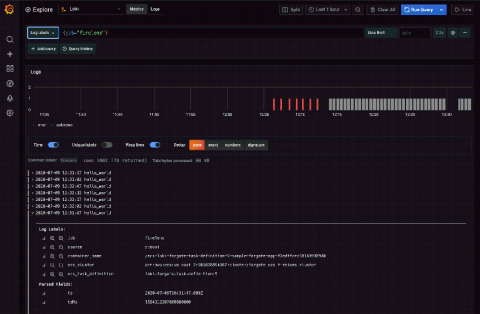
Elastic Container Service (ECS) is the fully managed container orchestration service by Amazon. Combined with Fargate, Amazon’s serverless compute engine for containers, you can run your container workload without the need to provision your own compute resources. But how can you consolidate and query all of your logs and metadata for these workloads? Enter Loki, the log aggregation system from Grafana Labs that has proven to increase performance and decrease costs.