Mailchimp
Not subscribed to OpsMatters Newsletter


Feature flags are great and serve us in so many ways. However, we do not love long-lived feature flags. They lead to more complicated code, and when we inevitably default them to be true for all our users, they lead to unused sections of code. In other words, tech debt. How do we stay on top of this? Find out how Honeycomb’s trigger alerts proactively tell you to go ahead and clean up that feature flag tech debt!
Hey, there. This is part six of the Elastic SIEM for home and small business blog series. If you haven’t read the first, second, and third blogs, you may want to before going any further. In the Getting started blog, we created our Elasticsearch Service deployment and started collecting data from one of our computers using Winlogbeat. In the Securing cluster access blog, we secured access to our cluster by restricting privileges for users and Beats.
The ever-growing complexity, scale and pace of IT environments puts a huge burden on IT Ops, NOC, and DevOps teams, who are tasked with keeping these environments up and running. One of the biggest challenges is Root Cause Analysis (RCA). When something breaks, they need to determine what broke it, and they need to do it fast.
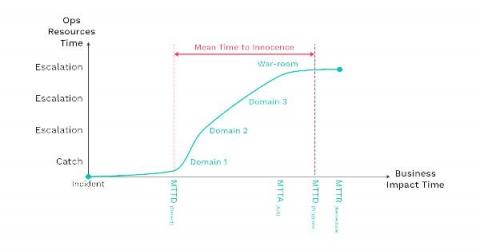
If your end users regularly report issues before your Operations team discovers them, you need AIOps for earlier detection, faster action, and more precise diagnostics.
Today on the blog, we chat with Jai Das, president, co-founder and managing director of Sapphire Ventures, a venture capital firm in Silicon Valley and an investor in OpsRamp. Jai has 20 years of experience in helping companies scale and become market leaders, including Alteryx, Box, ExactTarget. Five9, Mulesoft, Nutanix, and Square. Prior to joining Sapphire Ventures in 2006, Jai worked at Oracle, Intel Capital, Agilent Ventures, and MVC Capital.
In this era of globalization, sharing information has been made quiet doable for everyone. Whether it is in the form of text, an image, a video or any other visual form, thanks to the built-in features of mobile devices, like screen recording and screenshots etc, sharing information has become a cinch. In fact, most people prefer sharing information in the form of an image or a video instead of typing lengthy text messages.
Geolocation can be automatically built into the Graylog platform by using the "GeoIP Resolver" plugin with a MaxMind database. However, you can further improve your ability to extract meaningful and useful data by leveraging the functionality of pipelines and lookup tables. In fact, these powerful features allow you to do much more than the basic plugin.
A lot of tech companies struggle with creating an effective and efficient on-call schedule internally for their product and service, this results in much longer downtimes when something goes wrong. They often over-burden their team members with repeated on-call duty which results in team member fatigue. Here’s how to create an on-call schedule that your team might love.
Editor’s note: CVE-2020-0601, unsurprisingly, has created a great deal of interest and concern. There is so much going on that we could not adequately provide a full accounting in a single blog post! This post focuses on detection of the vulnerability based on network logs, specifically Zeek as well as Endpoint. If you are collecting vulnerability scan data and need to keep an eye on your inventory of systems that are at risk, then check out Anthony Perez’s blog.