Mailchimp
Not subscribed to OpsMatters Newsletter


Cyberattacks are never going away; in fact, things appear to be getting worse. The complexity of attacks has escalated, resulting in more sophisticated, targeted takedowns. Just look at the attacks in Baltimore, Atlanta, Florida, and Spain within the past few years. Organizations around the world have had their operations halted by ransomware, with some taking weeks to get back to normal.
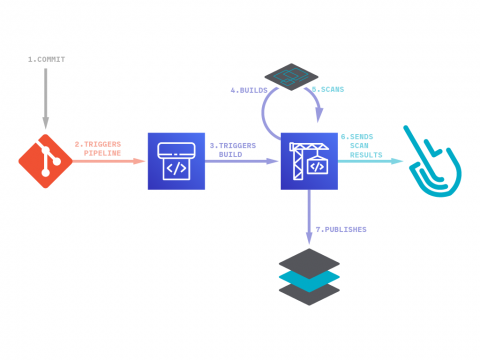
In this blog post you’ll learn how to set up image vulnerability scanning for AWS CodePipeline and AWS CodeBuild using Sysdig Secure DevOps Platform. AWS provides several tools for DevOps teams: CodeCommit for version control, CodeBuild for building and testing code, and CodeDeploy for automatic code deployment. The block on top of all these tools is CodePipeline that allows them to visualize and automate these different stages.
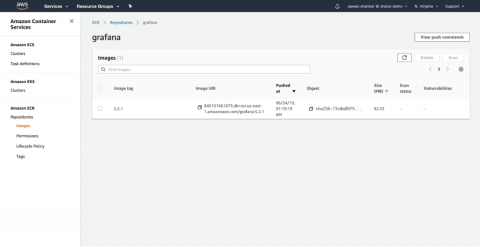
As container adoption in AWS takes off, ECR scanning is the first step towards delivering continuous security and compliance. You need to ensure you are scanning your images pulled from AWS ECR for both vulnerabilities and misconfigurations so that you don’t push applications running on AWS that are exploitable.
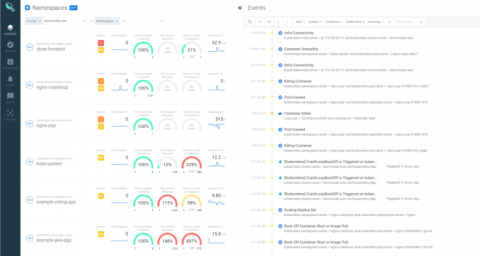
Cloud teams are increasingly adopting AWS container services to deliver applications faster at scale. Along with the roll out of cloud native architectures with containers and orchestration, what’s needed to stay on top of the security, performance and health of applications and infrastructure has shifted. At Sysdig, we’ve worked with Amazon to provide tools and integrations that help secure your Cloud Native workloads deployed across all AWS container services.
Netdata is made up from agile teams who are deeply committed to improving the usability of our product. We want to respond to our users and introduce in-demand features. Working directly with our community is the best way to make Netdata better. But we face the same the dilemma as all agile teams: How do we do this safely?
Surely you know what a backup is, right? It is what we could also call a “safety copy“. Free backups are precisely that, softwares through which you can create backup copies of your data, to save them on drives such as external hard drives, flash drives, network devices and others. What are they for? Simply put, to restore the original information that you had, of course, after having lost it by accident in some misfortune or careless incident.
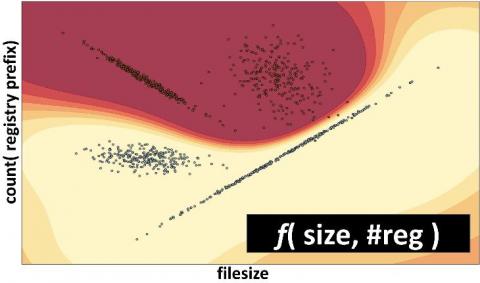
We recently launched Elastic Security, combining the threat hunting and analytics tools from Elastic SIEM with the prevention and response features of Elastic Endpoint Security. This combined solution focuses on detecting and flexibly responding to security threats, with machine learning providing core capabilities for real-time protections, detections, and interactive hunting. But why are machine learning tools so important in information security? How is machine learning being applied?
Back on September 4th, we filed a lawsuit against floragunn GmbH, the makers of Search Guard, a security plugin for Elasticsearch and Kibana, for a multi-year pattern of copying our proprietary code. After filing the claim, we have continued to investigate floragunn’s actions. Today, we have updated our lawsuit in two important ways. First, we have identified additional copying by floragunn with respect to the separate, proprietary code base for our Kibana product.